
 A French press association has asked the country’s competition watchdog to take action against Google’s artificial intelligence-generated article summaries, which the trade group says deprive newspapers and magazines of readers. The group has called on the regulator to make a decision similar to that which ordered Meta to put forward a payment plan and resume talks with traditional media seeking fees for the use of their content by AI tools.
Source: French press body asks competition watchdog to take action over Google AI
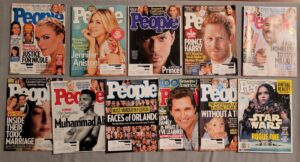 Jonathan Roberts spent years studying dark matter and the origins of the universe. Now, he’s tackling another intractable problem: How to keep artificial-intelligence tools from cannibalizing the publishing industry. Publishers have faced declining traffic for years, but AI-powered search engines and chatbots are accelerating the demise of a business long reliant on clicks and ad revenue. As chief innovation officer at Barry Diller’s magazine publishing company People Inc., Roberts is charged with reimagining the media business for an AI era.
 Anthropic has revealed that it will soon watermark content that is processed (not just generated!) by any of its models. In a support article, Anthropic explained that it was rolling out machine-readable watermarks to comply with the European Union’s AI Act. Anthropic confirmed that moving forward, all new models offered globally—not just in the EU—will mark AI-generated content “from day one.”
 Suno, the service that allows users to create AI-generated songs, today announced new tools to mark tracks made on its platform, limit downloads, and update community guidelines to prevent copycat songs. The changes come as Suno faces numerous lawsuits from labels and artist bodies. In a blog post, co-founder and CEO Mikey Shulman shared core principles and said that the platform wants to promote original creation while enabling more people to make music with its AI tools.
 On 15 July 2026, the Australian Government announced a new policy direction for the governance of artificial intelligence (AI). The proposed framework includes mandatory national standards for AI, regulation of data centres, and the immediate establishment of an Office of AI to design and implement these governance mechanisms. Of particular significance from an intellectual property perspective, the policy positions copyright as a central pillar of Australia’s AI governance framework.
 Warner Music Group expects its licensing deals with artificial intelligence platforms to start boosting its subscription streaming revenue, starting from WMG’s 2027 fiscal year, which begins on October 1, 2026. That’s according to Warner Music Group CEO Robert Kyncl, who told the company’s fiscal Q3 earnings (calendar Q2) call on Wednesday (August 5) that WMG’s partnerships with AI music firms Suno, Stability AI, KLAY, and Udio would drive the contribution.
 The Society of Composers, Authors, and Music Publishers of Canada (SOCAN) and SoundExchange have announced that the two entities have entered into a purchase agreement under which SOCAN will acquire the Canadian Musical Reproduction Rights Agency (CMRRA). The transaction, which is still subject to regulatory approval, will unite the neighboring rights management of mechanical rights with public performance rights in Canada.
 The entertainment giant struck an alliance with TikTok that will have creators on the popular quick-hit video service making shorts tied to characters and stories from Marvel, Pixar, Star Wars, FX and more. The resulting pieces from creators who opt-in to the program will be available on both TikTok and on Disney+ in the form of “Verts,” the company’s vertical video products.
 Universal Music Group banked gross proceeds of EUR €403 million (USD $467 million) from selling part of its Spotify shareholding during the first half of 2026. On MBW‘s calculations, UMG artists could be in line for approximately $131 million of that money. The sale figure was disclosed by UMG CFO Matt Ellis on the company’s Q2 and H1 2026 earnings call on Thursday (July 30).
 South Korea‘s largest music copyright collective has ended its ban on registering songs made with artificial intelligence. The Korean Music Copyright Association (KOMCA) will now register AI-assisted works and pay royalties on them, provided a human creator took a substantial part in the writing, composition, or arrangement. The amended rules took effect on Monday (August 3), replacing a ban that had applied since March 24, 2025.