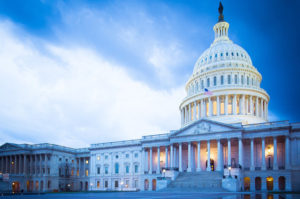
 The two competing pirate site-blocking bills that were introduced in Congress recently take different approached. While Rep. Darrell Issa’s ACPA targets VPNs and provides broad liability protections to Internet service providers, the bipartisan and bicameral DEFEND IP Act explicitly excludes VPNs, while covering more smaller ISPs. For more than a decade after the SOPA protests, pirate site blocking was a subject U.S. lawmakers preferred to avoid.
Source: Two U.S. Site-Blocking Bills Compete Over VPN Rules and ISP Liability
 A new startup pledges to give authors an easier way to bring their books to life for the screen. It, naturally, involves AI. Authors First, founded by private equity veteran Robert Hamwee, promises to let science-fiction and fantasy scribes adapt their titles as closely to their intended vision as possible. The company uses a combination of AI generators like Seedance 2.5 and Nano Banana and “other technology,” to help craft the adaptations without the budget considerations traditionally associated with such work
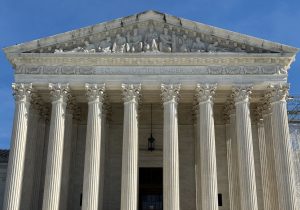 The majors and BMG have told the US Supreme Court that it should not let “one Fifth Circuit decision radically disrupt copyright worldwide”, as they push the justices to overturn a ruling won by songwriter Cyril Vetter. That January 12 ruling held that termination under US law returns an author’s rights across the world, and not only in the United States. The publishers say the industry is “actively negotiating deals running through 2072“, and that Vetter concedes foreign rights “represent a significant factor in those negotiations”.
 American producer Michael Smith has been sentenced to 18 months in prison for his infamous AI-powered streaming scam that netted him more than $8m in royalties. Smith had created hundreds of thousands of AI-generated tracks, uploaded them to streaming services, then used as many as 10,000 bot accounts to stream those songs fraudulently billions of times. “Michael Smith exploited super intelligence technology to generate a fraud,” said US attorney Jamie McDonald.
 At the pearly gates, Dolly Parton, in a sparkling gown, stands arm in arm with Tim Curry, dressed as Dr. Frank-N-Furter. “I knew I chose the right plus one,” Parton says to God, who is standing at heaven’s reception desk. In the bottom right corner of the cartoon is the pen name “BLOPER,” the signature of New Yorker cartoonist Brendan Loper. But Loper didn’t draw the cartoon, or sign it. It was generated by ChatGPT and first posted to Facebook by a Dolly Parton fan.
 Paramount closed its deal to acquire Warner Bros. Discovery on Tuesday, putting the tech scion David Ellison in control of a vast media empire that oversees many of Hollywood’s most valuable properties. The deal immediately catapults the combined company, now called Skydance, to the front rank of competitors alongside streaming titans like Netflix and YouTube, just behind giants like Disney and Amazon.
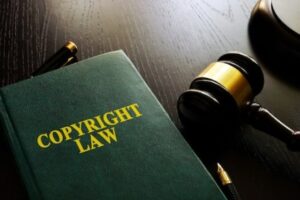 Both the Association of American Publishers and the Authors Guild have issued statements praising an appeals court decision in the Thomson Reuters v. ROSS copyright lawsuit that found ROSS’s copying of Thomson Reuters Westlaw headnotes was not fair use. It was the first time an appeals court ruled that such unauthorized copying by an AI company was not protected by fair use.
 The global artificial intelligence race is no longer defined solely by compute power and algorithmic breakthroughs. It is increasingly shaped by national copyright policies governing the ingestion of training data. As model builders race toward artificial general intelligence, they can run into a messy geopolitical question: how free are you to scrape the open web without paying the creators of the content behind it?
 On August 2, new transparency and disclosure requirements went into effect for chatbots and AI-generated content under the European Union (EU) Artificial Intelligence (AI) Act.
  What happens when you interview an