 On October 19, 2026, the Court released an order that could eventually shake the foundations of the music publishing business. There was no dramatic courtroom showdown, no impassioned closing argument, and no sweeping declaration about the rights of American songwriters. In fact, the justices didn’t decide the central copyright question at all. Instead, an unusual procedural action left standing a federal appeals court decision that could cost some of the world’s largest music companies a significant amount of money.
Source: The Supreme Court Just Threw a Wrench Into The Music Industry’s Cash Machine
 Nearly 300 authors filed copyright infringement claims against Meta Platforms on October 19 in the U.S. District Court for the Northern District of California, alleging the company trained its AI models on pirated copies of their books and, more recently, on physical books it bought and scanned without a license. Rather than join a class action suit, in which a few named plaintiffs sue on behalf of everyone, each author is pursuing an individual claim.
 The International Confederation of Music Publishers (ICMP) has accused AI companies of trying to “strong-arm” Australia’s government into loosening the country’s copyright rules on AI training. ICMP warned that, of the dozens of countries AI firms have lobbied for weaker copyright protections, Australia appears to be the only one considering the idea. ICMP Director General John Phelan said AI companies were asking policymakers to “legitimize larceny.”
 The labels made their case in a filing in Boston federal court last Tuesday (October 13), opposing Lightspeed’s motion to quash their subpoena. Among the topics they want a Lightspeed representative to answer questions on: the “legal risk of training data,” as discussed in a document Lightspeed has already produced in the case. The same Lightspeed document discusses a “two sided music platform,” according to the subpoena.
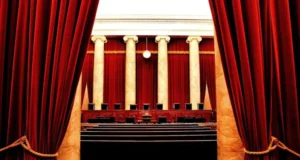 One marathon legal battle later, the Supreme Court has decided against reviewing the landmark precedent at the center of BMG v. Vetter, and organizations including the Songwriters Guild of America are touting the development as a major victory for songwriters. As many know, the important decision materialized in a years-running showdown involving Resnik Music Group and Vetter, who’d moved to terminate the grant of his copyright in “Double Shot (Of My Baby’s Love)” under Section 304 of the Copyright Act.
 Meta will have to name the people who greenlit its torrenting of pirated books. A federal magistrate judge has ordered the company to identify everyone who approved sourcing books from LibGen and Anna’s Archive. This goes beyond the employees who ran the downloads and includes whoever decided whether to seed the books to others.
 Spotify’s voluminous submission is decidedly light on mentions of inflation – meaning the DSPs don’t appear to be on board with the annual inflation adjustments sought by Word Collections, the Songwriters Guild of America, and others. But they are adamant that Phono IV’s bundling provision, which, in brief, enables them to unilaterally reclassify multi-product subscriptions as bundles and reap massive mechanicals savings, has been an unmitigated success.
 This week, a new organization called the American Entertainment Alliance will begin publicly pushing for legislation to force the biggest entertainment and streaming companies — including Netflix, Disney, Amazon Prime Video and Skydance — to allocate half of their original content budgets to shows and movies from independent producers in the United States. The group’s supporters believe that if the biggest streamers buy a sizable share of programming from outside their own companies, it will reignite the television marketplace.
 Lawsuits can stop particular conduct, impose consequences, and establish important precedents. They can also end in private agreements that leave the central questions unanswered for everyone else. A settlement tells us that the parties have found terms they can accept. It does not tell us that musicians have acquired a future they can live with. Copyright needs to be completely reconceptualized and recreated in the United States and across the world.
 Australian voters would prefer changes to copyright law that deliver some compensation to creatives rather than free-riding by AI companies training their models offshore, according to a new poll. A YouGov poll of 1,500 people, commissioned by Diffusion, a strategy practice that researches public attitudes to AI, adds to calls from a bipartisan parliamentary inquiry into AI urging Prime Minister Anthony Albanese to make changes to help AI companies who want to train their models in Australia.