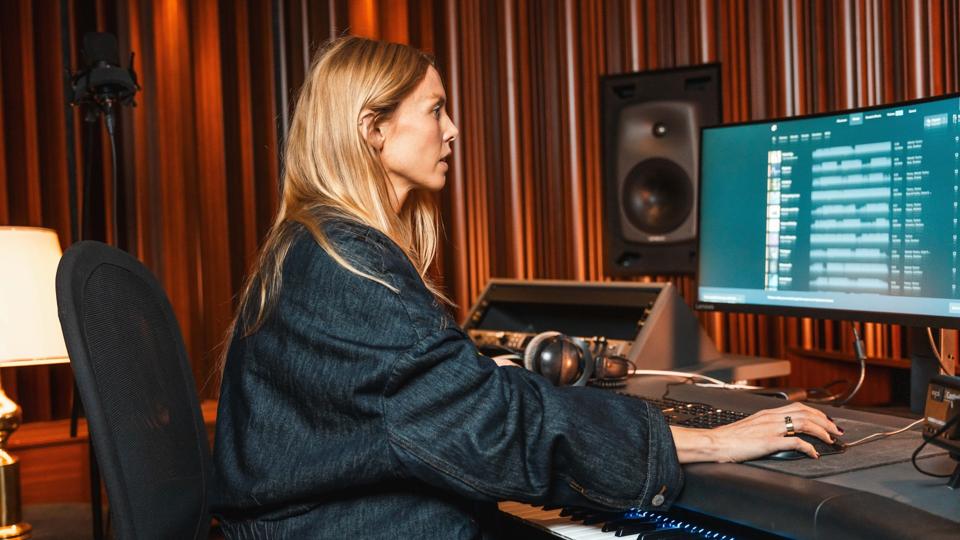
 Rather than generate new songs, Adapt lets users reshape tracks in Epidemic’s catalog of 50,000 tracks and 200,000 sound effects —adjusting length, tempo, structure, or instrumentation with a few clicks. “It’s quite common you find a track you like, but then making it perfect for your story takes hours,” Höglund said. “The idea behind Adapt was to put those tools in the hands of creators so they can make those decisions immediately.”
Source: Epidemic Sound’s Bold AI Bet, Helping Creators And Paying Artists More

 President Donald Trump has renewed his threat of implementing tariffs on films produced outside the United States. It’s unclear what reignited the proclamation, but Trump made a similar declaration in May because he deemed foreign productions a “national security threat” to the American movie industry, adding that they not only draw filmmakers out to other markets but also bring “messaging and propaganda” into the United States.
 U.S. District Judge William Alsup issued the preliminary approval in San Francisco federal court Thursday after the two sides worked to address his concerns about the settlement, which will pay authors and publishers about $3,000 for each of the books covered by the agreement. It does not apply to future works. “This is a fair settlement,” Alsup said, though he added that distributing it to all parties will be “complicated.”
 In December 2020, US PROs ASCAP and BMI launched a public performance copyright database called Songview as a “groundbreaking collaboration” aimed to serve as a “comprehensive data resource for music users.” A “landmark expansion” of the platform was announced on Monday (September 29), with data from all four major performing rights organizations in the United States – ASCAP, BMI, GMR and SESAC – to be integrated into the Songview platform.
 Kirsty Innes, recently appointed as a special adviser to Liz Kendall, the secretary of state for science, innovation and technology, said “whether or not you philosophically believe the big AI firms should compensate content creators, they in practice will never legally have to”. Innes has deleted the statement, which she posted to X in February. In the deleted posts, seen by the Guardian, she said: “A lot of this has already happened and it can continue to happen outside the UK, whatever our laws say.”