
 In the study, published in Nature, the MIT researchers Zheng Dai and David Gifford set out to to test whether a generated image can be traced back to a single piece of training data. They were looking specifically at diffusion models, the systems most often used for generating images and video. Their finding? It comes down to how big the training data set is. They found that the more data a model is trained on, the harder it becomes to attribute its output to any particular piece of training data.
Source: Does generative AI actually copy artists? Researchers say it’s up for debate
 Australia passed legislation on Thursday that will force tech giants to pay millions of dollars in levies if they fail to strike commercial deals with local media outlets for news on their platforms. The News Bargaining Incentive taxes the companies 2.5% on their advertising revenues unless they strike agreements. Proceeds from the scheme would be directed to local Australian news outlets, whose content helps drive user engagement and advertising revenue on the tech firms’ platforms.
 As AI continues to kill traffic to websites, Google on Thursday threw a bone to those publishers negatively impacted by the change. It’s now allowing readers to push a button on a publisher’s website to indicate it’s a “favorite source” they’d like to see highlighted more often across Google Search, Discover, and Google News. The tech giant said it’s making this new, interactive “Preferred Sources” button available to online publishers to embed on their own websites.
 Stability AI, the AI startup backed by the likes of James Cameron and Sean Parker, has raised $76 million in a Series B funding round from a roster of investors including some of the entertainment industry’s top record labels and gaming companies. The company’s newest investors include the top three record labels, Universal Music Group, Warner Music Group and Sony Music Group; the gaming company Electronic Arts.
 Apple Music has told partners that music “materially generated” on AI platforms such as Suno will carry a “Made With AI” label on the service from later this year. At least, that is, if record labels and distributors tag the music with the relevant metadata before it reaches the platform. It will make a tagging system visible to listeners that Apple Music has run behind the scenes since March, when it introduced what it calls AI Transparency Tags.
 A group of Hollywood filmmakers, executives and actors has spent the last three years secretly meeting with Silicon Valley executives to try to address a simmering issue in the industry: how to define where AI is useful in the context of a human-controlled creative process. After a meeting last weekend of about 120 participants, the coalition landed on a framework that outlines how AI is already present in the film industry and defines ways humans can maintain control of other use cases.
 Universal Music Group has signed an exclusive, long-term global partnership with Apple Corps Ltd. covering merchandise, licensing, and e-commerce for The Beatles. The agreement was announced on Wednesday (August 19). It hands UMG worldwide physical and digital merchandise rights for the band and builds on Universal’s existing stewardship of The Beatles’ recorded music catalog.
 When an artificial intelligence image generator produces a portrait, whose work went into it? The question sits at the center of lawsuits, licensing deals, and proposed regulations worldwide. Artists want credit. Companies want clarity. Policymakers want a way to assign responsibility. New work from a team of researchers at MIT’s Computer Science and Artificial Intelligence Laboratory (CSAIL) suggests that for models trained on large datasets, the question may often have no answer.
 Each suit attaches an exhibit of 500 compositions, described as “a prioritized representative bellwether”. Round Hill says it plans to amend both cases to cover “potentially ten thousand or more” works. The suits claim direct infringement under the Copyright Act, plus circumvention of access controls and removal of copyright management information under the Digital Millennium Copyright Act.
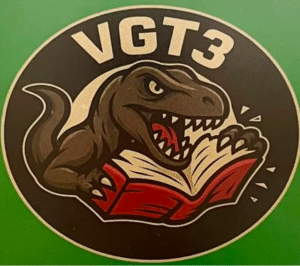 On Monday, 404 Media revealed that it had connected with a bookseller who agreed to plant an Airtag in a rare book that was part of a bulk order. That Airtag was then tracked to an Amazon AI training facility in Las Vegas that housed a team focused on tearing books from their spines and scanning pages. Apparently tone-deaf to the escalating backlash over destructive book scanning, a logo on the door of that team’s warehouse, VGT3, showed a Tyrannosaurus rex preparing to devour a book.