
 The extreme financial pressures and upside-down economics of artificial intelligence, involving expensive upkeep and equally expensive lawsuits, should make the news of Character.ai’s bankruptcy easily predictable. The circumstances of the company’s failure illustrate precisely what AI critics have been warning about for the past few years: that AI is expensive, resource-intensive, and ripe for legal challenge. The crash-and-burn could offer a preview for the music industry.
Source: Character.ai Bankruptcy Highlights AI’s Ludicrous Cash Burn Problem.
 The UK’s Copyright Tribunal has ruled in favor of PRS for Music in its dispute with the UK Cinema Association (UKCA) over the licensing of music in cinemas, according to the society. In an announcement on Monday (October 12), PRS said the Tribunal had approved changes to its cinema tariff, known as Tariff C, including an increase in the royalty rate cinemas pay to use its members’ music.
 The term “AI” has emerged as an addendum to the Hays Code, the 20th-century guidelines dictating what studios should and shouldn’t include in their films. It’s spooked the worlds of corporate and art alike, especially after months of headlines over the potentially world-ending nature of AI models and warnings that progress needs to be paced. But much like the way studios and directors of the 1960s and ’70s embraced the once-taboo profanity and nudity, this year AI has found a new wave of advocates eager to go public.
 The New York Times, Agence France-Presse and The Economist on Monday joined more than 40 publishers in a coalition aimed at preventing AI firms from using or profiting from their content without permission. The Standards for Publisher Usage Rights (SPUR) coalition, launched in February, now has more than 80 members across over 20 countries. New members include The Atlantic and Brazil’s National Association of Newspapers, joining founding members such as the Financial Times, BBC and Associated Press.
 Australian voters would prefer changes to copyright law that deliver some compensation to creatives rather than free-riding by AI companies training their models offshore, according to a new poll. A YouGov poll of 1,500 people, commissioned by Diffusion, a strategy practice that researches public attitudes to AI, adds to calls from a bipartisan parliamentary inquiry into AI urging Prime Minister Anthony Albanese to make changes to help AI companies who want to train their models in Australia.
 In recent years, AI has made it much easier to create new websites and tools. That also applies to pirate sites, including TorrentClaw, a torrent search engine that’s largely built with AI. The site’s TrueSpec feature, for example, checks what’s inside torrents. The results reveal a recurring malware trick, where a genuine VLC player is used as a decoy to load a malicious file.
 It’s a well-known fact at this point that music publishers, particularly in the United States, led by the National Music Publishers Association (NMPA), have furiously decried Spotify’s audiobook bundle as a scheme to lower its royalty obligations—especially its mechanical royalty payments to songwriters and publishers. Nonetheless, the statistics are clear: Spotify reports that more than a million users have subscribed to its Audiobooks+ tier to date.
 The $110 billion merger of Hollywood’s two giants, Paramount and Warner, was completed on Tuesday. Together with Disney, Sony and Universal Pictures, Skydance has become one of the only remaining four major studio giants in Hollywood. Judging from the information released so far, this new Hollywood giant will bet that technology and artificial intelligence will reshape the entertainment industry.
 The US Copyright Office (USCO) has launched a public inquiry into music streaming fraud. The inquiry follows a request from Scott Fitzgerald, the Republican US Representative for Wisconsin’s 5th District, who sits on the House Judiciary Committee. His letter to the USCO, dated May 21, opens by asking it to “examine the contributory effects of artificial intelligence (AI) in music streaming fraud, and the resulting effect on the music industry.”
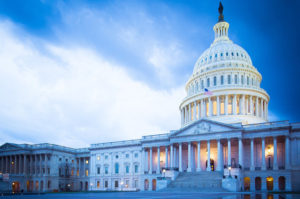 The two competing pirate site-blocking bills that were introduced in Congress recently take different approached. While Rep. Darrell Issa’s ACPA targets VPNs and provides broad liability protections to Internet service providers, the bipartisan and bicameral DEFEND IP Act explicitly excludes VPNs, while covering more smaller ISPs. For more than a decade after the SOPA protests, pirate site blocking was a subject U.S. lawmakers preferred to avoid.