
 Article 50 of the EU AI Act has entered into force. Enterprises running generative AI tools now have to comply with Article 50, which requires providers and deployers of certain AI systems to tell people when they’re interacting with a machine, and to mark AI-generated content so it can be flagged as such. Providers of systems generating synthetic audio, image, video, or text face a separate duty under Article 50. Marking is the mechanism. The output needs a machine-readable mark, detectable as artificially-generated or manipulated.
Headlines
Company Offering Printed Books to Train AI Stops After 404 Media Coverage
 On July 30, nine days after 404 Media’s reporting, ISBNdb added a note to its homepage and an update on its news page about the change. “We’ve seen the recent coverage about a marketing landing page on our site, and we understand the concern it raised. The facts: ISBNdb has never purchased, scanned, or sold a book — for AI training or anything else,” ISBNdb wrote. “We don’t train AI models, and we never have. The page was a test of market interest; no such service was ever brought to life.
Source: Company Offering Printed Books to Train AI Stops After 404 Media Coverage
Suno faces proposed class action lawsuit over data breach
 Suno has been hit with a proposed class action lawsuit over a data breach that reportedly exposed the personal information of 55.3 million users. The suit was filed on Friday (July 24) in the US District Court for the District of Massachusetts, where Suno is headquartered. The named plaintiff is Alec Pilavian, a Florida resident and Suno customer who is seeking to represent everyone in the United States whose data was compromised in the breach.
Source: Suno faces proposed class action lawsuit over data breach
Writers Guild Withdraws Support From Film Festival Over A.I.
 The dispute involves Urbanworld, a New York festival that showcases Black and multicultural films, and the Writers Guild of America East, a 6,000-member union that represents movie, television, podcast and digital news writers. In a letter sent to staff and supporters, Urbanworld’s founder, Stacy Spikes, said the guild had “withdrawn its sponsorship and participation in this year’s festival” over his decision to add films made with A.I. tools.
Source: Writers Guild Withdraws Support From Film Festival Over A.I.
‘First tremors’ of AI earthquake showing in digital revenue hit
 The “first tremors in an earthquake” hitting the news industry from AI answers and audience habit changes can be seen in the latest snapshot of digital publishing revenue. Following four consecutive quarters of growth among UK publishers taking part in the Digital Publishers’ Revenue Index, Q1 2026 saw a swing back into decline. Among 13 publishers (nine B2C and four B2B) surveyed by the Association of Online Publishers and Deloitte, total digital revenue dropped by 4.55% in the first three months of this year.
Source: ‘First tremors’ of AI earthquake showing in digital revenue hit
Authors have mixed feelings about the $1.5B Anthropic copyright infringement ruling
 Charles Graeber said he has some positive feelings about being among the three main plaintiffs in one of the largest copyright infringement settlements in history. “I was proud to be part of a group that showed that a ragtag bunch of authors joined later by publishers could actually hold together as a class, face a Goliath and get a meaningful number out of them,” The New York Times bestselling author and journalist told NPR. But he’s also hesitant to call the efforts and outcome of the lawsuit an all-out win.
Source: Authors have mixed feelings about the $1.5B Anthropic copyright infringement ruling
Actors are losing roles to AI knockoffs of themselves
 What does it feel like when an AI version of you takes your job? That was the strange reality facing actor Ashley BeLoat when she came across an AI-generated remake of a series she had starred in.
BeLoat told Business Insider it felt like an affront to the personal experience she’d drawn on for the role, as a nurse who has worked in oncology and faced cancer in her personal life. “Being an actor is a very vulnerable thing,” she said. “It requires us to live private moments in public.”
Source: Actors are losing roles to AI knockoffs of themselves
ChatGPT starts blocking direct requests to copy an author’s style
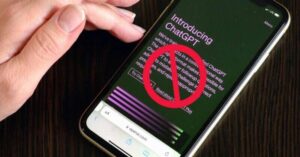 OpenAI’s ChatGPT is now refusing requests to generate text that directly mimics the style of famous authors. When asked to do so, the popular LLM instead offers a response that draws on the “broad qualities” of those authors “while remaining distinct in its own voice,” for example. In refusing to directly copy the “exact style” of various authors, ChatGPT offered instead to capture an overall “feeling” by incorporating some of the common features found in those authors’ work.
Source: ChatGPT starts blocking direct requests to copy an author’s style
Librarians are hosting viral ‘Avoiding AI’ workshops for people who are fed up with Big Tech
 “Everybody’s on their phone at my program!” jokes Charlie Bailey, a librarian in South Philadelphia. He’s just asked his audience to pull out their phones so that he can walk them through the steps of disabling Apple Intelligence and Gemini. “I was inspired by the feeling of people’s frustration with AI tools being kind of forced onto them, and feeling like AI tools we didn’t ask for are suddenly everywhere in our lives,” Bailey told TechCrunch.
Source: Librarians are hosting viral ‘Avoiding AI’ workshops for people who are fed up with Big Tech
Why AI is sampling – and how that will affect the future (Opinion)
 AI is sampling. There, I said it. And as someone who’s been handling sample clearances for over three decades, I should know. The key thing to understand here is that AI can never generate something new; it can only recontextualize existing data that is fed into it. When it comes to music, that data is the 1s and 0s of digital music files. So when you ask an AI platform to generate a song, the result is inherently tied to the music that was used to train the model.
Source: Why AI is sampling – and how that will affect the future (opinion)