
 Charles Graeber said he has some positive feelings about being among the three main plaintiffs in one of the largest copyright infringement settlements in history. “I was proud to be part of a group that showed that a ragtag bunch of authors joined later by publishers could actually hold together as a class, face a Goliath and get a meaningful number out of them,” The New York Times bestselling author and journalist told NPR. But he’s also hesitant to call the efforts and outcome of the lawsuit an all-out win.
Source: Authors have mixed feelings about the $1.5B Anthropic copyright infringement ruling
 What does it feel like when an AI version of you takes your job? That was the strange reality facing actor Ashley BeLoat when she came across an AI-generated remake of a series she had starred in.
 OpenAI’s ChatGPT is now refusing requests to generate text that directly mimics the style of famous authors. When asked to do so, the popular LLM instead offers a response that draws on the “broad qualities” of those authors “while remaining distinct in its own voice,” for example. In refusing to directly copy the “exact style” of various authors, ChatGPT offered instead to capture an overall “feeling” by incorporating some of the common features found in those authors’ work.
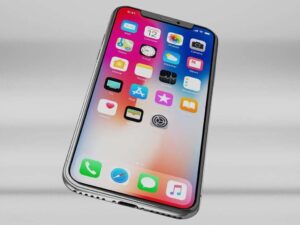 “Everybody’s on their phone at my program!” jokes Charlie Bailey, a librarian in South Philadelphia. He’s just asked his audience to pull out their phones so that he can walk them through the steps of disabling Apple Intelligence and Gemini. “I was inspired by the feeling of people’s frustration with AI tools being kind of forced onto them, and feeling like AI tools we didn’t ask for are suddenly everywhere in our lives,” Bailey told TechCrunch.
 AI is sampling. There, I said it. And as someone who’s been handling sample clearances for over three decades, I should know. The key thing to understand here is that AI can never generate something new; it can only recontextualize existing data that is fed into it. When it comes to music, that data is the 1s and 0s of digital music files. So when you ask an AI platform to generate a song, the result is inherently tied to the music that was used to train the model.
 The AFM just recently submitted its first amended complaint, which arrives on the heels of an ugly exchange over the relevant labor contract provision. And as many know, said provision pertains to the “new use” of recordings featuring the work of AFM musicians. In the union’s view, the defendant majors’ gen AI licensing deals with Udio and Suno fall squarely into the new use category; the AFM members who contributed to the involved tracks are therefore allegedly entitled to compensation.
 On July 7, 2026, the European Data Protection Board (EDPB) published draft guidelines on web scraping for generative AI. The Guidelines are intended to provide practical GDPR guidance in one of the more complex areas of AI development and will be of direct relevance to any organization building or procuring generative AI systems trained on internet-sourced data The Guidelines apply to both organizations that scrape data from external internet sources to train generative AI systems and those that acquire and reuse pre-scraped datasets from third parties.
 Scammers are allegedly exploiting a flaw in Facebook’s ‘Edit Post’ feature to backdate stolen videos and hijack copyright claims through Meta’s Rights Manager. This allows them to monetize content of other creators, while also hitting them with strikes. The problem is at the center of several Indian lawsuits that want the American tech giant to close this surprisingly simple loophole.
 US consumers are “more wary than willing” to engage with entertainment content created using generative AI, according to a new study from Luminate. That finding comes from AI & Media: Audience Attitudes, a report from Luminate Intelligence published on Friday (July 24). The report draws on Luminate’s US Entertainment 365 survey to assess consumers’ own use of generative AI applications, and how its use in creating songs, movies and TV shows affects their willingness to engage.
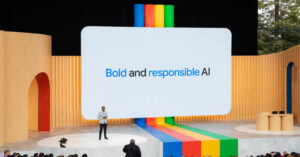 AI search is rapidly becoming the default, whether users like it or not. In just a year’s time, Google’s AI-generated answers in search, known as AI Overviews, have gone from appearing in 15% of searches to 43%, according to a new report, driving a shift in how web users consume information online. In a recent analysis of the generative landscape, market intelligence firm Similarweb noted that what began as an AI layer on top of search has become an integral part of the search journey itself.