 Technically signed into law in June, the Colorado Artist Company Act took effect this past Wednesday, August 12th. Spanning nearly 30 pages, the bill aims to allow artists – referring here to those who create across music, painting, photography, film, writing, “digital content,” and different areas yet – to establish the aforementioned artist companies (or “A-Companies”). According to the law, the term describes an “ALLC” with “a stated artistic mission set forth in its articles of organization or operating agreement.”
Source: What’s an ‘A-Company’? The ‘Colorado Artist Company Act’ Goes Into Effect
 Shortly after scoring a multimillion-dollar book deal for a debut author, the novelist’s agents pulled the plug. They couldn’t verify that the book had been wholly written by their client. The spectacular implosions of big book deals over suspected AI use—and fears about who might be next—are forcing a reckoning over the nature of authorship, the relationship between writers and publishers and the industry’s long-term survival. But nobody can seem to agree who exactly is responsible for solving this problem, or even how much a problem it actually is.
 Suno, the AI music generator that’s managed to both rankle the music industry and lure some of its biggest talent to its side, has added music company BMG as its latest licensing partner as it prepares new models powered by licensed work. The partnership will see Suno pay for BMG’s repertoire of recordings from its artists, while also covering the use of any BMG songs to train Suno’s past models.
 A French press association has asked the country’s competition watchdog to take action against Google’s artificial intelligence-generated article summaries, which the trade group says deprive newspapers and magazines of readers. The group has called on the regulator to make a decision similar to that which ordered Meta to put forward a payment plan and resume talks with traditional media seeking fees for the use of their content by AI tools.
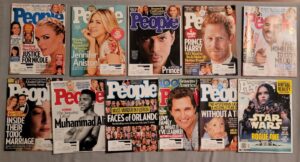 Jonathan Roberts spent years studying dark matter and the origins of the universe. Now, he’s tackling another intractable problem: How to keep artificial-intelligence tools from cannibalizing the publishing industry. Publishers have faced declining traffic for years, but AI-powered search engines and chatbots are accelerating the demise of a business long reliant on clicks and ad revenue. As chief innovation officer at Barry Diller’s magazine publishing company People Inc., Roberts is charged with reimagining the media business for an AI era.
 Anthropic has revealed that it will soon watermark content that is processed (not just generated!) by any of its models. In a support article, Anthropic explained that it was rolling out machine-readable watermarks to comply with the European Union’s AI Act. Anthropic confirmed that moving forward, all new models offered globally—not just in the EU—will mark AI-generated content “from day one.”
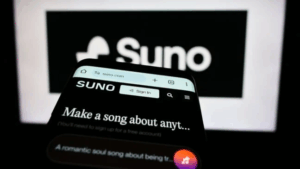 Suno, the service that allows users to create AI-generated songs, today announced new tools to mark tracks made on its platform, limit downloads, and update community guidelines to prevent copycat songs. The changes come as Suno faces numerous lawsuits from labels and artist bodies. In a blog post, co-founder and CEO Mikey Shulman shared core principles and said that the platform wants to promote original creation while enabling more people to make music with its AI tools.
 On 15 July 2026, the Australian Government announced a new policy direction for the governance of artificial intelligence (AI). The proposed framework includes mandatory national standards for AI, regulation of data centres, and the immediate establishment of an Office of AI to design and implement these governance mechanisms. Of particular significance from an intellectual property perspective, the policy positions copyright as a central pillar of Australia’s AI governance framework.
 Warner Music Group expects its licensing deals with artificial intelligence platforms to start boosting its subscription streaming revenue, starting from WMG’s 2027 fiscal year, which begins on October 1, 2026. That’s according to Warner Music Group CEO Robert Kyncl, who told the company’s fiscal Q3 earnings (calendar Q2) call on Wednesday (August 5) that WMG’s partnerships with AI music firms Suno, Stability AI, KLAY, and Udio would drive the contribution.
 The Society of Composers, Authors, and Music Publishers of Canada (SOCAN) and SoundExchange have announced that the two entities have entered into a purchase agreement under which SOCAN will acquire the Canadian Musical Reproduction Rights Agency (CMRRA). The transaction, which is still subject to regulatory approval, will unite the neighboring rights management of mechanical rights with public performance rights in Canada.