
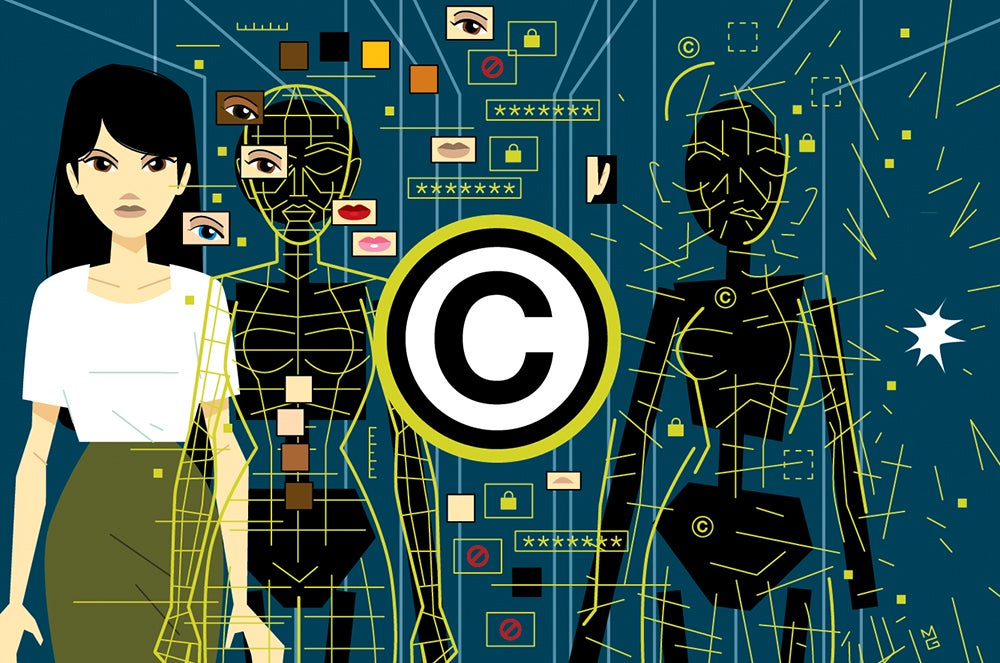
 Generative artificial intelligence can now counterfeit reality at an industrial scale. Deepfakes—photographs, videos and audio tracks that use AI to create convincing but entirely fabricated representations of people or events—aren’t just an Internet content problem; they are a social-order problem. The power of AI to create words and images that seem real but aren’t threatens society, critical thinking and civilizational stability.
Copyright lawsuits push sports teams to rethink their digital content strategies
 Sports teams have become content machines in the digital age, producing a constant stream of videos, highlights, and promotions to engage fans worldwide. But as James Bullock-Webster, director and head of tech, media & cyber at New Dawn Risk, told Insurance Business, this evolution has also exposed organizations to a surge in media liability claims. “What we’ve seen in the last few years is a real surge of media music copyright infringement claims,” he said.
Source: Copyright lawsuits push sports teams to rethink their digital content strategies
TIDAL opens direct uploads for indie artists, but tracks won’t earn royalties
 The feature positions Block-ownedTIDAL as a competitor to SoundCloud, which pioneered the direct-upload and discovery model for independent artists. The new TIDAL Upload service allows artists to post tracks directly to the music service, where the tracks become available alongside the platform’s catalog of 180 million songs. Uploaded tracks are accessible to all listeners, including those without paid subscriptions, and artists can keep tracks private to share only with selected collaborators.
Source: TIDAL opens direct uploads for indie artists, but tracks won’t earn royalties
Only 36% of UK Club Royalties Reach the Right Creators—Study
 A six-month audit published by Fair Play, a new independent initiative aiming for transparency and accountability in electronic music royalties, provides some much-needed insight into how UK royalties are collected and distributed, and how effectively so. The answer? Not very. It turns out that only 36% of club performance royalties reach the correct creators, with an estimated £5.7 million ($7.4 million) misallocated every year.
Source: Only 36% of UK Club Royalties Reach the Right Creators—Study
WMG and Feed.fm Partner to Bring Premium Music Clips to Apps
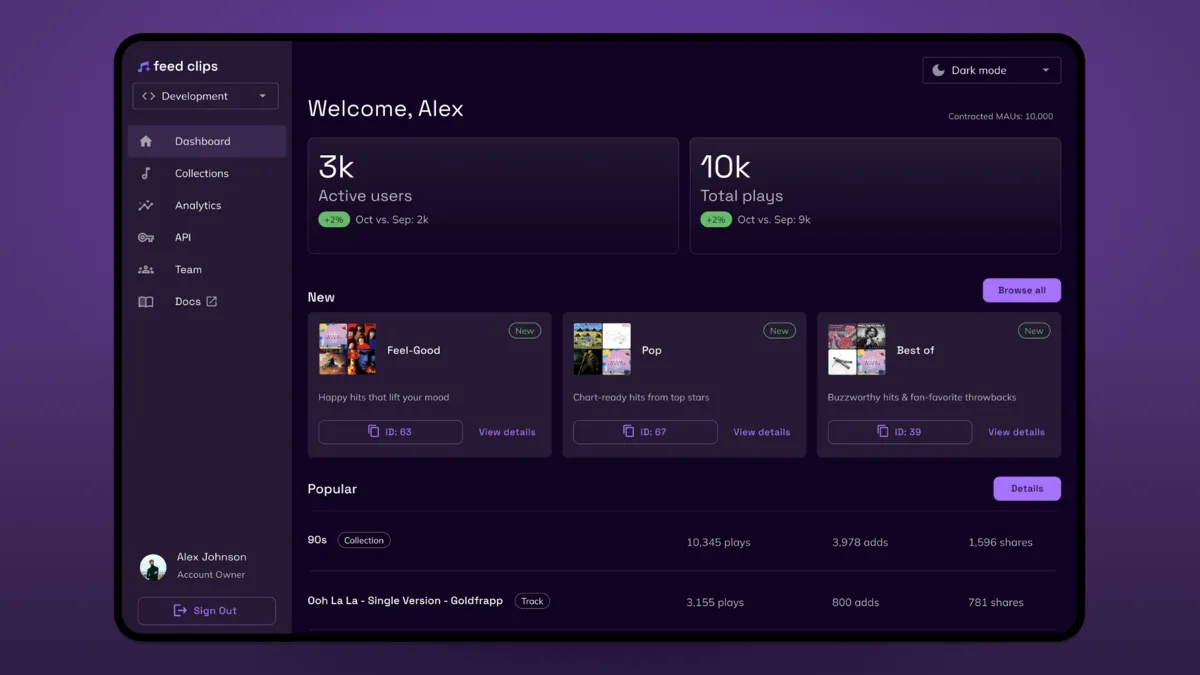 WMG partners with Feed.fm, launching a music clip API that enables digital platforms to integrate song clips from major labels’ catalogs. The collaboration unites Feed.fm’s technology with WMG’s expansive catalog to make it easier for developers to integrate fully licensed song clips through a secure system. With this partnership, Feed.fm is now touting an ‘end-to-end solution’ for music clips that includes licensing, curation, and in-app experiences delivered via API.
Source: WMG and Feed.fm Partner to Bring Premium Music Clips to Apps
Tit-For-Tat: Porn Producers Counter Meta’s “Personal Use” Piracy Defense
S trike 3 Holdings and Counterlife Media have fired back at Meta, claiming that the tech giant’s “personal use” defense for pirating their adult films is a smokescreen. The producers allege that Meta not only used algorithms to hoard its films for AI training, but also sacrificed the producers’ works to improve download speeds through BitTorrent’s “tit-for-tat” mechanism.
Source: Tit-For-Tat: Porn Producers Counter Meta’s “Personal Use” Piracy Defense * TorrentFreak
News publishers win first round of copyright claim against AI start-up Cohere
 News publishers have celebrated a victory in the first stage of their copyright lawsuit against Canadian AI start-up Cohere. A judge has rejected in full Cohere’s motion to dismiss, saying publishers had “adequately alleged” that outputs from the AI provider were “quantitatively and qualitatively similar” to their content. Some 14 news and magazine publishers are involved in the case, which was filed in February.
Source: News publishers win first round of copyright claim against AI start-up Cohere
Europe Begins Rethinking Its Crackdown on Big Tech
 In a significant shift, policymakers in Brussels are moving to scale back and simplify landmark rules for artificial intelligence and data privacy. Driven by growing concern that overregulation is stifling economic growth, officials and business leaders across the 27-nation bloc are questioning whether Europe’s digital rulebook has gone too far and left companies lagging the United States and China.
Paul McCartney adds track to ‘silent’ album protesting UK AI copyright law proposal
 In February, more than 1,000 artists – including Kate Bush, Annie Lennox of Eurythmics, and Damon Albarn of Blur and The Gorillaz – released a “silent album” in protest against the UK government’s proposed changes to copyright law. Now the album is being released on vinyl, with a bonus track – a recording of an empty studio – from Beatles legend Sir Paul McCartney. protesting UK AI copyright law proposal
Anthropic Judge Slams Efforts to Have Authors Opt Out of Settlement
 An attempt by a law firm to convince authors to opt out of the $1.5 billion class action settlement reached with Anthropic met with fierce resistance by presiding judge William Alsup in a November 13 hearing. ClaimsHero, launched a publicity campaign to persuade authors not to agree to the terms reached in the Bartz et al. v. Anthropic claiming that if authors opt out, they may be able win a bigger payout in the case.
Source: Anthropic Judge Slams Efforts to Have Authors Opt Out of Settlement