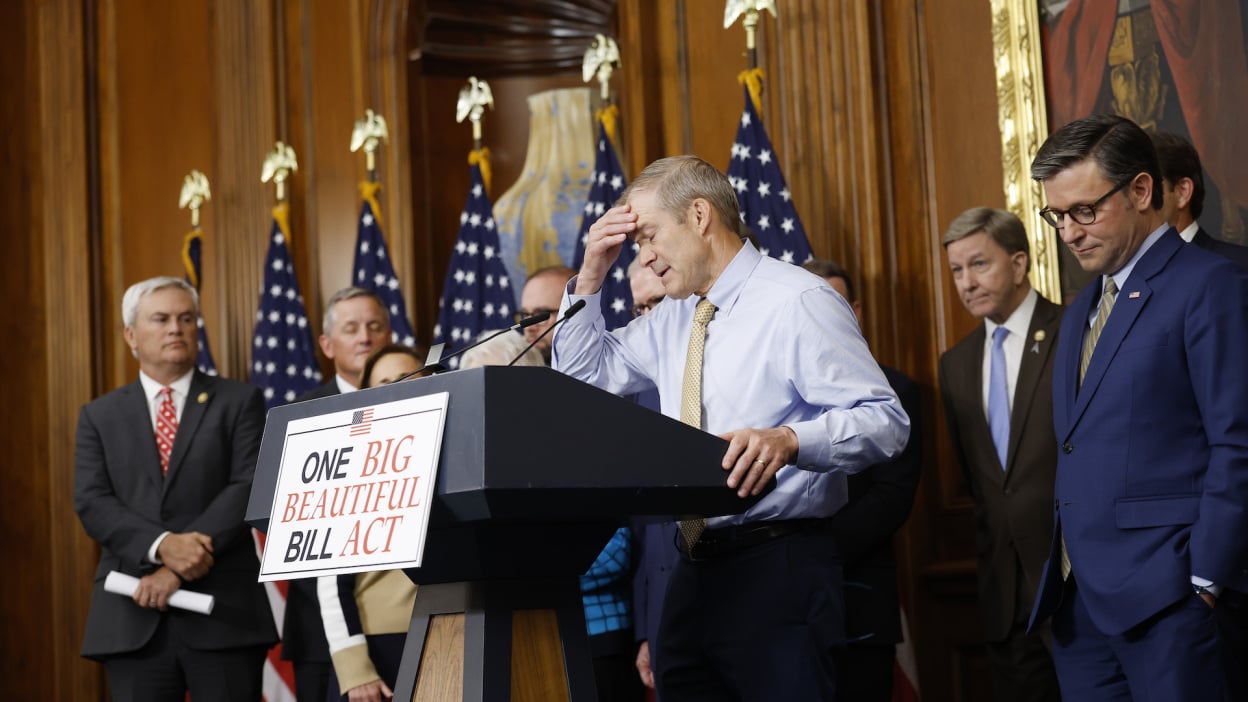
 Buried in the Republican budget bill is a proposal that will radically change how artificial intelligence develops in the U.S., according to both its supporters and critics. The provision would ban states from regulating AI for the next decade. Opponents say the moratorium is so broadly written that states wouldn’t be able to enact protections for consumers affected by harmful applications of AI, like discriminatory employment tools, deepfakes, and addictive chatbots.
Source: The One Big Beautiful Bill Act would ban states from regulating AI
 For decades, Hollywood directors, including Stanley Kubrick, James Cameron and Alex Garland, have cast artificial intelligence as a villain that can turn into a killing machine. Now Google—a leading developer in AI technology —wants to move the cultural conversations away from technology as seen in “The Terminator,” “2001: A Space Odyssey” and “Ex Machina.”
 Google and OpenAI want to reposition chatbots as virtual assistants. If high switching costs are successfully introduced into the AI market, that will cement the position of a small number of dominant businesses. Today’s general-purpose AI market is highly concentrated: four applications account for around 95% of the market. This combination of concentration and lock-in is hugely troubling for the media.


 Already this year, 26 laws governing various kinds of deepfakes have been enacted, following 80 in 2024 and 15 in 2023, according to the political database Ballotpedia. This month in Tennessee, sharing deepfake sexual images without permission became a felony that carries up to 15 years of prison time and as much as $10,000 in fines.


 Humans have nuanced awareness. They draw on their experiences to make inferences and logical decisions. AI models are, however, only as good as their training data. An AI model’s accuracy doesn’t entirely depend on the underlying algorithms’ technical sophistication or the amount of data processed. Instead, accurate AI performance depends on trustworthy, high-quality data during training and analytical performance tests.