 Two leading progressive lawmakers, Sen. Bernie Sanders and Rep. Greg Casar, are unveiling legislation Wednesday that would ban artificial superintelligence and create a federal agency to oversee advanced AI as some of the industry’s own leaders urge Congress to impose guardrails on the advancing technology. The bill would also pause advanced AI development until guidelines are implemented while creating the Department of Artificial Intelligence. Multiple employees at leading AI companies are endorsing the bill.
Source: Sen. Sanders unveils bill to ban artificial superintelligence, create Dept. of AI
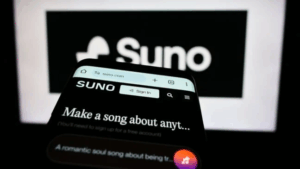 The company set out that description in a statement responding to a second copyright lawsuit filed on Friday (September 18) by Universal Music Group and Sony Music Entertainment in Boston federal court, where the labels’ original case against the company is already being heard. Suno said v6 was trained on “interactions including creations and preference signals” from its community.
 Sony Music Group has joined the Alliance for Responsible Innovation in the Arts & Media, the AI policy coalition better known as ARIAM. It is the first music company to join the group, which launched in June 2026 with members drawn from film, television, journalism, publishing, education, and technology. Sony Music Group says the coalition is focused on advancing responsible AI across the creative and media sectors.
 The company has commissioned a survey of 1,070 business executives in the UK about how their companies use music, estimating that around 800,000 business locations there play music every day. However, 86% of those companies are playing that music through regular streaming services – Spotify, Apple Music, YouTube Music and Amazon Music are all popular options – despite those consumer services not being licensed for business use.
 Tilly Norwood, an AI-generated “actress,” is having a rough time on its first press tour. The production company that created it, Particle6 Group, has made it available for 75 simultaneous interviews with journalists, and it seems to be making mistakes in all of them. In one particularly odd interview with Piers Morgan and actor Tom Conti, which was recorded and posted online, Norwood seems to malfunction and abruptly begin speaking Chinese.
 Among the top-line items: Paramount has committed to not sell the Paramount Studios or Warner Bros. lots in California for at least five years. That comes after Paramount Skydance chief David Ellison had threatened to pull up stakes from the Golden State if he couldn’t close the WBD deal by Oct. 1. Under the terms of the proposed settlement, Paramount will invest at least an additional $300 million on film production in the U.S. annually — for a total of $1.5 billion over five years
 The proposed merger was met with heated opposition by activist groups, top talent like Mark Ruffalo and whispers by Ellison’s legacy media competitors. But groups like the Hollywood labor guilds are celebrating the settlement news, as the staring contest between Ellison and the AGs caused paralysis in development and spending seemingly across the board at both companies.
 SoundExchange has signed a reciprocal agreement with Music Nation Copyrights Management (MusicNation) covering neighboring rights in the United States and the United Arab Emirates. The deal means artists and rights owners registered with SoundExchange will be paid when their recordings are played in the UAE, while Emirati creators will be paid when their music is played in the US.
 SubmitHub has announced a new AI policy that builds on Spotify’s move to keep AI music out of recommendations. With Spotify tightening the leash on what can earn royalties, SubmitHub says it won’t build a platform that promotes music that won’t get any plays on the major streamers. It’s a notable change given that neither SubmitHub nor Spotify seemed to have much of a problem with AI-generated music in its infancy. But now things are changing.
 VPN providers with over 100,000 American users could be ordered to block pirate sites under the bill Rep. Darrell Issa introduced last week. The full text shows that VPNs were added after last year’s discussion draft, which only mentioned ISPs and DNS resolvers. How a VPN should block access “from the United States” remains an open question, as the technical implementation is not defined.