
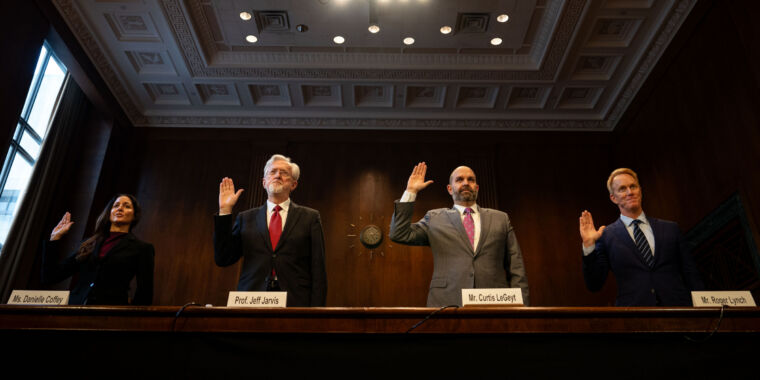
 On Wednesday, news industry executives urged Congress for legal clarification that using journalism to train AI assistants like ChatGPT is not fair use, as claimed by companies such as OpenAI. Instead, they would prefer a licensing regime for AI training content that would force Big Tech companies to pay for content in a method similar to rights clearinghouses for music.
Source: At Senate AI hearing, news executives fight against “fair use” claims for AI training data

 In every legitimate market in the world, the use of others’ property requires the owner’s consent and agreed-upon compensation. Together, for example, music and technology have developed a burgeoning streaming market built on the common-sense principle that use of copyrighted creative works requires licensing and consent. AI developers must keep accurate records of the copyrighted works used by their models and make them available to rights holders seeking to enforce their rights.
 Like every company, Adobe is figuring out what the boundaries of copyright law and fair use look like in the age of AI, just like the creatives that rely on its products. But at the same time, it’s also making huge investments in and shipping generative AI tools like the Firefly image generator inside of huge mainstream software products like Photoshop and Illustrator.

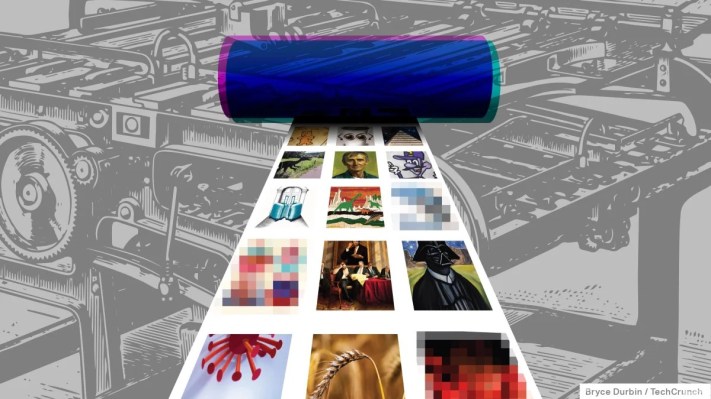
 In a submission to the House of Lords communications and digital select committee, OpenAI said it could not train large language models such as its GPT-4 model without access to copyrighted work. “Because copyright today covers virtually every sort of human expression – including blogposts, photographs, forum posts, scraps of software code, and government documents – it would be impossible to train today’s leading AI models without using copyrighted materials,” said OpenAI in its submission.