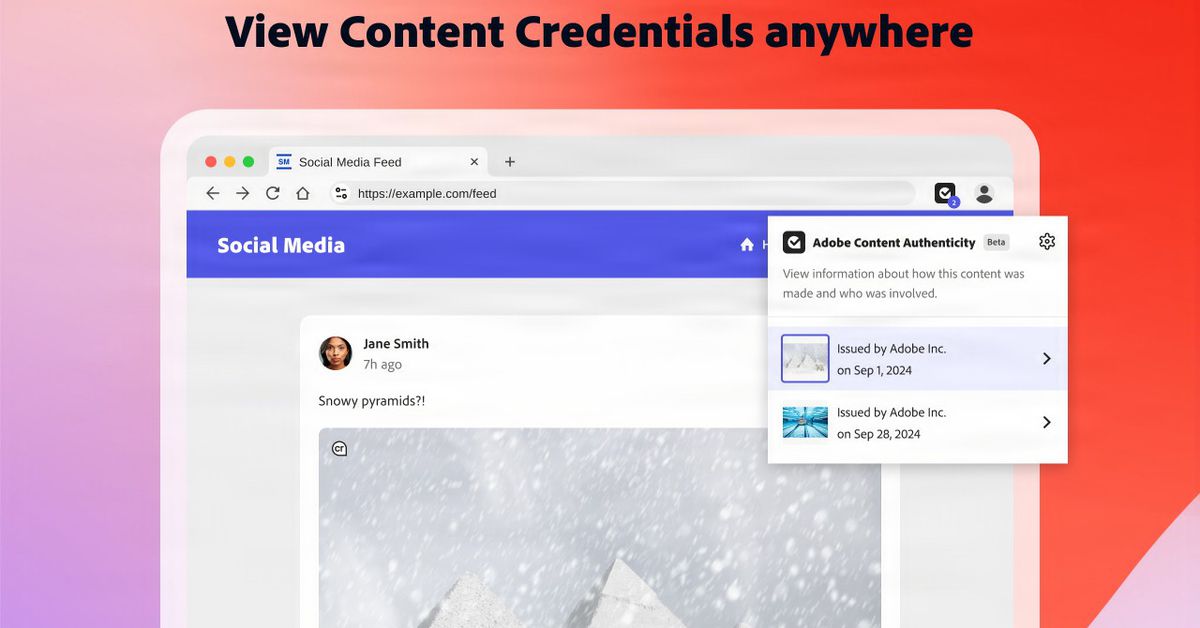
 As the engine powering the world’s digital artists, Adobe has a big responsibility to mitigate the rise of AI-driven deepfakes, misinformation, and content theft. In the first quarter of 2025, Adobe is launching its Content Authenticity web app in beta, allowing creators to apply content credentials to their work, certifying it as their own.
Source: Adobe has a new tool to protect artists’ work from AI

 Similar to Perplexity, ProRata’s answer engine will cite its sources, but takes a slightly different approach. Built on Meta’s Llama as its foundational large language model, ProRata’s search will only perform retrieval-augmented generation on content that it has licensed. ProRata’s answer engine also uses proprietary attribution algorithms designed to calculate how much any given publisher’s content contributed to an answer.
 Meta, the owner of Facebook and Instagram, sees the technology as a way to accelerate the work of Hollywood moviemakers and online creators. Like OpenAI, it has started testing the technology with a small group of professionals. Though many believe the technology could speed the work of seasoned moviemakers, it could also replace less experienced digital artists.
 The most sweeping effort yet to regulate artificial intelligence, a California bill that could have informed laws around the world, is going back to the drawing board. Gov. Gavin Newsom vetoed the legislation, known as S.B. 1047 — under strong pressure from Silicon Valley giants. Now, governments must again try to figure out the best way to rein in the fast-growing technology’s excesses, while letting innovation flourish.