
Technology

Google is reportedly pursuing AI licensing deals with news publishers

According to Bloomberg, Google is reportedly preparing to launch a “pilot project initially with about 20 national news outlets,” where the participants would license their content for Google’s AI tools. There isn’t much detail beyond the initial report, but it sounds similar to the strategy that OpenAI has employed. Over the past few years, OpenAI has struck licensing deals with major publishers like Hearst, Condé Nast, Vox Media, The Atlantic, and News Corp.

Source: Google is reportedly pursuing AI licensing deals with news publishers

Spotify’s Lax Controls Exposed: The Blaze Foley AI Song Debacle

The modern music streaming world, for all its accessibility, has faced challenges in this brave new world powered by AI. The appearance of an AI-generated song titled “Together” on the official Spotify page of the late country icon Blaze Foley is a glaring example of how Spotify has failed to adequately protect both artists’ legacies and listener trust.

Source: Spotify’s Lax Controls Exposed: The Blaze Foley AI Song Debacle

The European Union Passed Its Artificial Intelligence Bill. Will It Enforce It?

The European Parliament passed the Artificial Intelligence Act, the first law that would regulate AI. Critics are wondering how powerful that will be. Practically, like most legislation, the act represented a compromise, applying different levels of regulatory scrutiny to applications with different levels of risk. Broadly, it fell far short of perfect, but it was much better than the proposed 10-year moratorium on enforcing state laws affecting AI in the American “One Big Beautiful Bill Act.”

Source: The European Union Passed Its Artificial Intelligence Bill. Will It Enforce It?

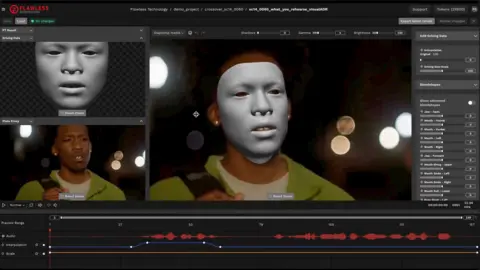
‘You can make really good stuff – fast’: new AI tools a gamechanger for film-makers

Within two weeks, Mallal, who directed Spiders in the Sky on his own, was able to make a film about the Ukraine attack that would have cost millions – and would have taken at least two years including development – to make pre-AI. “Using AI, it should be possible to make things that we’ve never seen before,” he said. “We’ve never seen a cinematic news piece before turned around in two weeks. We’ve never seen a thriller based on the news made in two weeks.”

Source: ‘You can make really good stuff – fast’: new AI tools a gamechanger for film-makers

Hollywood’s being reshaped by generative AI. What does that mean for screenwriters?

As AI creeps further into Hollywood, screenwriters like Billy Ray, Paul Schrader, Bong Joon Ho and Todd Haynes, along with a new class of tech disruptors, are navigating the uncertain future of storytelling. “My level of impostor syndrome, neuroticism and guilt is high enough while I’m working my ass off,” Ray says by phone, his voice equal parts weariness and outrage. “There’s no way I’d make myself feel worse by letting a machine do my writing for me. Zero interest.”

Source: Hollywood’s being reshaped by generative AI. What does that mean for screenwriters?

AI-generated music is going viral. Should the music industry be worried?

The quality and originality of AI music have often been criticized, but experts say that as generative AI becomes more sophisticated, it’s becoming harder and harder for the average listener to distinguish between human and machine. ″[The Velvet Sundown]” is much better music than most of what we’ve heard from AI in the past,” Jason Palamara, an assistant professor of music technology at the Herron School of Art and Design, told CNBC.

Source: AI-generated music is going viral. Should the music industry be worried?

Rise of the Machines: Inside Hollywood’s AI Civil War

Hollywood is currently in the midst of an AI insurgency, though even that noun may not do the moment justice. Though still fragmented, the effort is increasingly looking like a full-on takeover, a Pixar-like artquake that aims to change the provenance of images, the business of production and (not to put too fine a point on it) the language of cinema itself. In response to this ambition, a countermovement has arisen, a prickly resistance to the idea of removing creativity from human hands.

Source: Rise of the Machines: Inside Hollywood’s AI Civil War

Comcast, CAA Invest in ‘Ethical’ AI Video Start-Up Moonvalley in $84 Million Funding Round

Moonvalley, an AI research company that says it is developing “ethical” foundational AI video models trained exclusively on licensed content, announced $84 million in additional funding led by existing investor General Catalyst. The round includes strategic investments from CAA and Comcast Ventures, as well as AI cloud company CoreWeave.

Source: Comcast, CAA Invest in ‘Ethical’ AI Video Start-Up Moonvalley as Part of $84 Million Funding Round

The Media’s Pivot to AI Is Not Real and Not Going to Work

Telling journalists they must use AI is not a business strategy. Partnering with AI companies is a business move, but becoming reliant on revenue from tech giants who are creating a machine that duplicates the work you’ve already created is not a smart or sustainable business move, and therefore it is not a smart business strategy.

Source: The Media’s Pivot to AI Is Not Real and Not Going to Work

EU report says GenAI’s ‘fair use’ defense does not compute

A research paper commissioned by the European Parliament has called for an EU law to pay writers, musicians, and artists whose work has been used to train GenAI models. The study finds the current exception for text-and-data mining (TDM) in EU law “was not designed to accommodate the expressive and synthetic nature of generative AI training, and its application to such systems risks distorting the purpose and limits of EU copyright exceptions.”

Source: EU report says GenAI’s ‘fair use’ defense does not compute

Get the latest RightsTech news and analysis delivered directly in your inbox every week
We respect your privacy.