As streamers evolve their acquisition strategy in Europe, producers and broadcasters are finding new opportunities as well as challenges. “Back in 2020, 60% of the top 10 shows on Netflix were originals, and now, 60% of the top 10 shows are acquisitions, licensed in from AMC and others,” says Guy Bisson, executive director and co-founder of Ampere Analysis. The change reflects the “fundamental shift in attitudes towards licensing.”
Rights
OpenAI exec rules out sharing revenue from SearchGPT with publishers, for now
OpenAI’s head of media partnerships has said it does not currently intend to share SearchGPT ad revenue with publishers. But he added that the matter was “an evolving space for us right now” and that it was in OpenAI’s interests to provide enough value to stop publishers opting out of appearing in SearchGPT results.
Source: OpenAI exec rules out sharing revenue from SearchGPT with publishers, for now
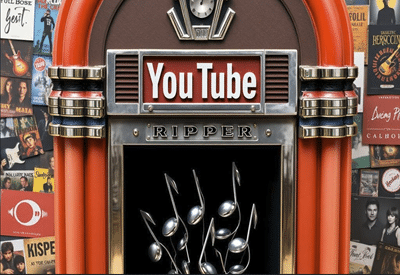
AI vs. audio pirates: catching sophisticated copyright evasion with AI
Long Short-Term Memory (LSTM) networks, a type of recurrent neural network, are adept at analyzing sequential data, making them ideal for detecting temporal manipulations in audio. Even transformer models, the technology behind advanced language AI like ChatGPT, are being applied to audio analysis, processing long sequences of audio data to identify complex patterns and relationships that might escape other systems.
Source: AI vs. audio pirates: catching sophisticated copyright evasion with AI
Tencent Music is ‘deploying advanced AI tools’ to crack down on infringement
According to TME: “We believe AI should be a supportive tool rather than a substitute for musicians creating original works. We implement compliance assessments and continuous monitoring of AI products and operations to ensure that AI-generated musical content is properly licensed and musicians’ creative works are fully protected.”
Adobe has a new tool to protect artists’ work from AI
As the engine powering the world’s digital artists, Adobe has a big responsibility to mitigate the rise of AI-driven deepfakes, misinformation, and content theft. In the first quarter of 2025, Adobe is launching its Content Authenticity web app in beta, allowing creators to apply content credentials to their work, certifying it as their own.
Source: Adobe has a new tool to protect artists’ work from AI
The Race to Block OpenAI’s Scraping Bots Is Slowing Down
It’s too soon to say how the spate of deals between AI companies and publishers will shake out. OpenAI has already scored one clear win, though: Its web crawlers aren’t getting blocked by top news outlets at the rate they once were. The generative AI boom sparked a gold rush for data—and a subsequent data-protection rush (for most news websites, anyway) in which publishers sought to block AI crawlers and prevent their work from becoming training data without consent.
Source: The Race to Block OpenAI’s Scraping Bots Is Slowing Down
This new AI answer engine plans to pay media companies for their content
Similar to Perplexity, ProRata’s answer engine will cite its sources, but takes a slightly different approach. Built on Meta’s Llama as its foundational large language model, ProRata’s search will only perform retrieval-augmented generation on content that it has licensed. ProRata’s answer engine also uses proprietary attribution algorithms designed to calculate how much any given publisher’s content contributed to an answer.
Source: This new AI answer engine plans to pay media companies for their content
Warner and Meta strike multi-year licensing deal covering Instagram, Facebook, WhatsApp
Warner Music Group has become the latest major music company to strike a fresh multi-year licensing deal with Facebook parent company, Meta. The new agreement includes Meta properties Facebook and Instagram, plus Messenger, Horizon, and Threads. WMG’s new deal with Meta also includes, for the first time, the technology giant’s popular messaging app, WhatsApp.
SCAPR Reports $1.05B in 2023 Performer Royalties Collections
The Societies’ Council for the Collective Management of Performers’ Rights (SCAPR), now counting as members 61 collective management organizations from 45 countries, just recently published its 2023 report. All told, the mentioned member CMOs – referring to 47 “ordinary members” and 14 “associated members,” the likes of the U.K.’s PPL among the former – are said to represent over one million performers.
Source: SCAPR Reports $1.05B in 2023 Performer Royalties Collections
Canadian Copyright Crisis: IFRRO Calls on Ottawa For Reform
The IFRRO general assembly this week has been comprised of 150 members from 80 nations, and from that plenary, the organization has issued a statement that calls the recommendations of Access Copyright and Copibec, an ”initiative intended “to restore a viable market for the reproduction of copyrighted works in the Canadian educational environment, in line with international copyright commitments.”
Source: Canadian Copyright Crisis: IFRRO Calls on Ottawa For Reform