 The Washington Post, owned by Amazon founder Jeff Bezos, has gone into business with artificial-intelligence powerhouse OpenAI. Under the agreement, ChatGPT will display summaries, quotes and links to original reporting from the Washington Post in response to relevant search queries. ChatGPT will featur the Post’s content across politics, global affairs, business, technology and more, “always with clear attribution and direct links to full articles,” the newspaper said.
Source: Jeff Bezos’ Washington Post Inks OpenAI Licensing Deal for ChatGPT Search
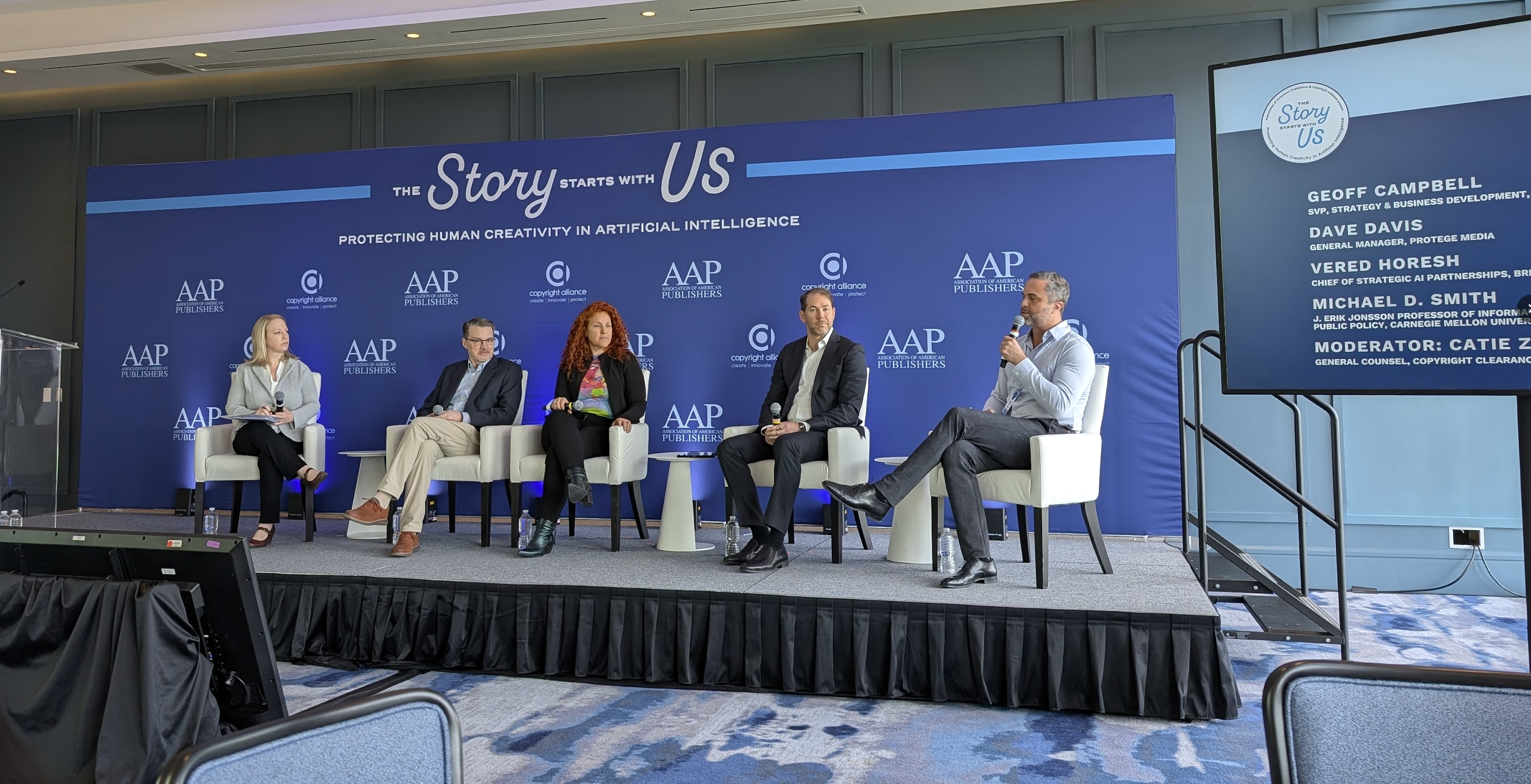


 The Association of American Publishers filed an amicus brief on April 11 supporting authors in their class action lawsuit against Meta for copyright infringement related to AI training. The brief argues that Meta’s use of copyrighted works to train its LLaMA AI model fails to meet fair use standards and contradicts the company’s claims that licensing options for such content don’t exist.
 A group of professors specializing in copyright law has filed an amicus brief in support of authors suing Meta for allegedly training models without permission. The brief, filed on Friday in the U.S. District Court for the Northern District of California, San Francisco Division, calls Meta’s fair use defense “a breathtaking request for greater legal privileges than courts have ever granted human authors.”
 US performing rights organizations Ascap and BMI have filed their responses to the US Copyright Office’s recent notice of inquiry concerning the PROs sector. Both emphasize the fundamental importance these organizations play for songwriters, composers and music publishers; both suggest that the system is already heavily regulated and that additional regulation risks increasing the costs and burden for members; and both see bad faith in some of the ‘music users’ – licensors of music – whose concerns have sparked the inquiry.