
 Walk into a corner of a newsroom somewhere and you can often find it affixed to a bulletin board, perhaps peeking out from behind the coffee pot: the Society of Professional Journalists’s Code of Ethics. It’s less than a thousand words, fitting neatly on a poster. But those words — organized around four key journalistic principles — are important enough, asserts Dan Axelrod, that they just might save our democracy.
Marketplace
Study Says Library E-book Lending Hurts Industry Sales
 Titled “An Empirical Study of the Impact of Library E-Lending on the Book Economy” and conducted by Secretariat Advisors, the report predicts that “decreases in library e-book prices or certain other changes to licensing terms, as required in recent state legislative initiatives, would cause further harm to commercial markets,” including publishers, authors, and booksellers.
Source: Study Says Library E-book Lending Hurts Industry Sales
Musicians and Actors Unite in UK Campaign Against Voice Cloning for AI
 A group of more than 80 performers, including actor Hugh Bonneville and singer Sandi Thom, have written to the UK government to demand greater protection against their voices being used by AI. Together, they are asking Prime Minister Andy Burnham to introduce legislation that would better protect every person in the UK against voice cloning and AI training on recordings without consent. Audiobook narrator Alice Sockett co-founded the campaign, calling voice cloning “an existential threat to our entire industry.”
Source: Musicians and Actors Unite in UK Campaign Against Voice Cloning for AI
New Report Examines Writers’ Attitudes toward AI
 A study commissioned by the Gotham Ghostwriters and Bernoff.com found that while most professional writers are embracing AI tools, authors, specifically fiction authors, are much more wary. The majority of all writers think that AI poses both a threat and an opportunity. 61% reported using AI tools, which they say increase their productivity by an average of 31%, but only 7% of respondents have published AI-generated text.
Google Launches AI Tool to Add Interactivity to E-books
 In something of a first, Google has launched a new AI application for books that publishers seem to actually like, thanks to its apparent respect for copyright protections. Today, the company introduced Expert Intelligence (EI), a feature that allows someone reading an e-book purchased on Google Play’s e-bookstore to interact with the title—by asking questions about the book, taking a quiz after reading it, or producing an infographic of key data—through Google’s AI research tool, Gemini Notebook.
Source: Google Launches AI Tool to Add Interactivity to E-books
SoundCloud to Allow Direct Music Purchases
 SoundCloud announced that it will begin rolling out direct music purchases, now in beta, on the streaming platform direct from artist pages. Starting Wednesday (Aug. 26), around 200 Artist Pro creators will be able to sell songs directly from their profiles on SoundCloud, providing an additional source of revenue for artists. “Artists should be able to build their audience in one place, on one platform,” Eliah Seton, SoundCloud’s CEO, said in a statement. “SoundCloud has always been where artists find their first fans and build real communities.
Google gives publishers a new way to fight AI-driven traffic losses
 As AI continues to kill traffic to websites, Google on Thursday threw a bone to those publishers negatively impacted by the change. It’s now allowing readers to push a button on a publisher’s website to indicate it’s a “favorite source” they’d like to see highlighted more often across Google Search, Discover, and Google News. The tech giant said it’s making this new, interactive “Preferred Sources” button available to online publishers to embed on their own websites.
Source: Google gives publishers a new way to fight AI-driven traffic losses
Sick of A.I. Slop? So Are Tech Giants.
 Spotify, a music streamer, said it removed 75 million bulk uploads, duplicate songs and other “spammy” tracks last year — a sizable chunk of its total portfolio. LinkedIn said in July that “A.I. slop is a top priority for all of us” and developed a button for users to report it. Researchers from YouTube’s parent company, Google, described how a video service wiped 130,000 channels of low-quality content off its platform over six months.
AI Has Plunged the Book Publishing Industry Into Utter Chaos
Shortly after scoring a multimillion-dollar book deal for a debut author, the novelist’s agents pulled the plug. They couldn’t verify that the book had been wholly written by their client. The spectacular implosions of big book deals over suspected AI use—and fears about who might be next—are forcing a reckoning over the nature of authorship, the relationship between writers and publishers and the industry’s long-term survival. But nobody can seem to agree who exactly is responsible for solving this problem, or even how much a problem it actually is.
Source: AI Has Plunged the Book Publishing Industry Into Utter Chaos
Meet the Media Industry’s Nerd-in-Chief
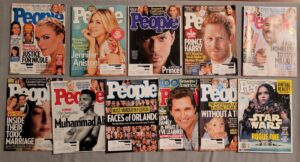 Jonathan Roberts spent years studying dark matter and the origins of the universe. Now, he’s tackling another intractable problem: How to keep artificial-intelligence tools from cannibalizing the publishing industry. Publishers have faced declining traffic for years, but AI-powered search engines and chatbots are accelerating the demise of a business long reliant on clicks and ad revenue. As chief innovation officer at Barry Diller’s magazine publishing company People Inc., Roberts is charged with reimagining the media business for an AI era.