 Anthropic has begun embedding an imperceptible watermark in all text its newest Claude models generate. The change took effect for models launched in the EU on August 2, 2026, and Anthropic says it will apply worldwide. Anthropic laid out the plan in a support article after signing the EU AI Act’s Code of Practice on transparency. In other words, it’s not exactly volunteering to do this.
Source: Anthropic Is Watermarking Every Claude AI Output. Builders Are Already Trying to Break It
 Content creators on Twitch are raging at the Amazon-owned streaming platform, which the company says will train its AI on Twitch streamers’ content by default, unless they opt out. It’s a stance that many major companies seem to be taking to ensure they can freely train their AI models from the platforms they own. “Why is it not opt-in? That’s what everybody is spamming in chat,” said Twitch’s Chief Product Officer Mike Minton during a livestream. Well, there’s an honest answer: If this was opt-in, nobody would opt in.
 Anthropic has revealed that it will soon watermark content that is processed (not just generated!) by any of its models. In a support article, Anthropic explained that it was rolling out machine-readable watermarks to comply with the European Union’s AI Act. Anthropic confirmed that moving forward, all new models offered globally—not just in the EU—will mark AI-generated content “from day one.”
 Google has begun giving publishers a prominent “Top Stories” plug above many news-based queries which generate an AI Overview summary. While the move could lead to more referral traffic for publishers, they could lose the opportunity to feature in these snippets if they opt out of allowing their content to be used in AI Overviews.
 Just as printed letters can be scanned and converted into digital text, emerging technology can transform sheet music into sound. A new effort is underway to use optical music recognition (OMR) to bring to life music in the public domain for all to listen and access through the Internet Archive. Nearly 200 public domain songs have been uploaded to the Internet Jukebox—from John Philip Sousa marches to children’s folk songs and piano concertos by Frederic Chopin—and the collection is growing.
 Suno has been hit with a proposed class action lawsuit over a data breach that reportedly exposed the personal information of 55.3 million users. The suit was filed on Friday (July 24) in the US District Court for the District of Massachusetts, where Suno is headquartered. The named plaintiff is Alec Pilavian, a Florida resident and Suno customer who is seeking to represent everyone in the United States whose data was compromised in the breach.
 The “first tremors in an earthquake” hitting the news industry from AI answers and audience habit changes can be seen in the latest snapshot of digital publishing revenue. Following four consecutive quarters of growth among UK publishers taking part in the Digital Publishers’ Revenue Index, Q1 2026 saw a swing back into decline. Among 13 publishers (nine B2C and four B2B) surveyed by the Association of Online Publishers and Deloitte, total digital revenue dropped by 4.55% in the first three months of this year.
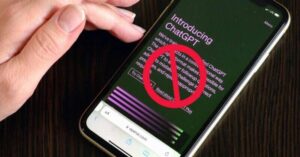 OpenAI’s ChatGPT is now refusing requests to generate text that directly mimics the style of famous authors. When asked to do so, the popular LLM instead offers a response that draws on the “broad qualities” of those authors “while remaining distinct in its own voice,” for example. In refusing to directly copy the “exact style” of various authors, ChatGPT offered instead to capture an overall “feeling” by incorporating some of the common features found in those authors’ work.
 AI is sampling. There, I said it. And as someone who’s been handling sample clearances for over three decades, I should know. The key thing to understand here is that AI can never generate something new; it can only recontextualize existing data that is fed into it. When it comes to music, that data is the 1s and 0s of digital music files. So when you ask an AI platform to generate a song, the result is inherently tied to the music that was used to train the model.
 On July 7, 2026, the European Data Protection Board (EDPB) published draft guidelines on web scraping for generative AI. The Guidelines are intended to provide practical GDPR guidance in one of the more complex areas of AI development and will be of direct relevance to any organization building or procuring generative AI systems trained on internet-sourced data The Guidelines apply to both organizations that scrape data from external internet sources to train generative AI systems and those that acquire and reuse pre-scraped datasets from third parties.