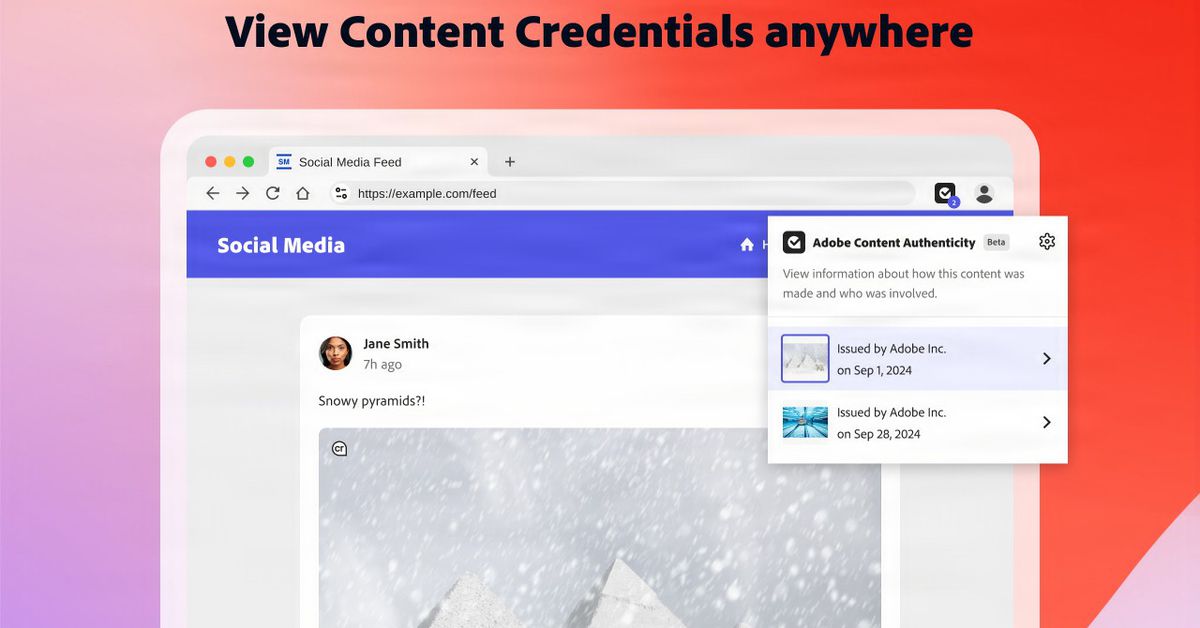
 As the engine powering the world’s digital artists, Adobe has a big responsibility to mitigate the rise of AI-driven deepfakes, misinformation, and content theft. In the first quarter of 2025, Adobe is launching its Content Authenticity web app in beta, allowing creators to apply content credentials to their work, certifying it as their own.
Source: Adobe has a new tool to protect artists’ work from AI


 Similar to Perplexity, ProRata’s answer engine will cite its sources, but takes a slightly different approach. Built on Meta’s Llama as its foundational large language model, ProRata’s search will only perform retrieval-augmented generation on content that it has licensed. ProRata’s answer engine also uses proprietary attribution algorithms designed to calculate how much any given publisher’s content contributed to an answer.

 The IFRRO general assembly this week has been comprised of 150 members from 80 nations, and from that plenary, the organization has issued a statement that calls the recommendations of Access Copyright and Copibec, an ”initiative intended “to restore a viable market for the reproduction of copyrighted works in the Canadian educational environment, in line with international copyright commitments.”
 Novelist Christopher Farnsworth has filed a proposed class-action copyright lawsuit against Meta Platforms (META.O), opens new tab accusing the tech giant of misusing his books and others to train its Llama artificial-intelligence large language model. Farnsworth said in the lawsuit, opens new tab on Tuesday that Meta fed Llama, which powers its AI chatbots, thousands of pirated books to teach it how to respond to human prompts.