 Sony has announced plans to launch a new blockchain platform, Soneium, with plans to integrate the company’s various businesses and intellectual property, potentially including its music catalog. Developed by Sony’s Singapore-headquartered joint venture with Startale Labs, Sony Block Solution Labs, Soneium is described as the “infrastructure network that forms the basis of Web3“.
Technology
What’s next for artists suing StabilityAI and Midjourney
 The class action lawsuit filed by several visual artists against AI image and video generation platforms StabilityAI, Midjourney, Runway and DeviantArt moved forward to the discovery stage last week. The lawsuit is one of the first legal challenges to AI platforms to reach this stage and could set the tone for other cases filed against AI companies.
Source: What’s next for artists suing Stability AI and Midjourney
Meta and Spotify CEOs criticize AI regulation in the EU
 In joint statements published to both companies’ respective websites on Friday, Meta CEO Mark Zuckerberg and Spotify CEO Daniel Ek complain that EU privacy regulations around AI are holding back innovation. Meta, for instance, points out that it has been prevented from being able to train its AI models on public data across Facebook and Instagram because regulators haven’t crafted legislation to address how this should be handled as of yet.
Source: Meta and Spotify CEOs criticize AI regulation in the EU
Condé Nast Inks Multiyear OpenAI Deal for Its Magazine Brands
 As part of the partnership, content from Vogue, The New Yorker, Condé Nast Traveler, GQ, Architectural Digest, Vanity Fair, Wired, Bon Appétit and more will be used within OpenAI products, including ChatGPT and the company’s Search GPT prototype, a new search feature which offers direct links to news stories. The company plans to eventually integrate it directly into ChatGPT.
Source: Condé Nast Inks Multiyear OpenAI Deal for Its Magazine Brands
Symphonic Opens Up Catalog to Train AI Models Through Musical AI Partnership
 Symphonic Distribution has forged a partnership with AI attribution and license management company, Musical AI, that will allow its users to become part of a licensed dataset used in AI training. Joining the dataset is a choice that Symphonic users must opt-in to and participating artists can earn additional income for their contribution.
Source: Symphonic Opens Up Catalog to Train AI Models Through Musical AI Partnership
How Much Should AI Giants Pay Hollywood?
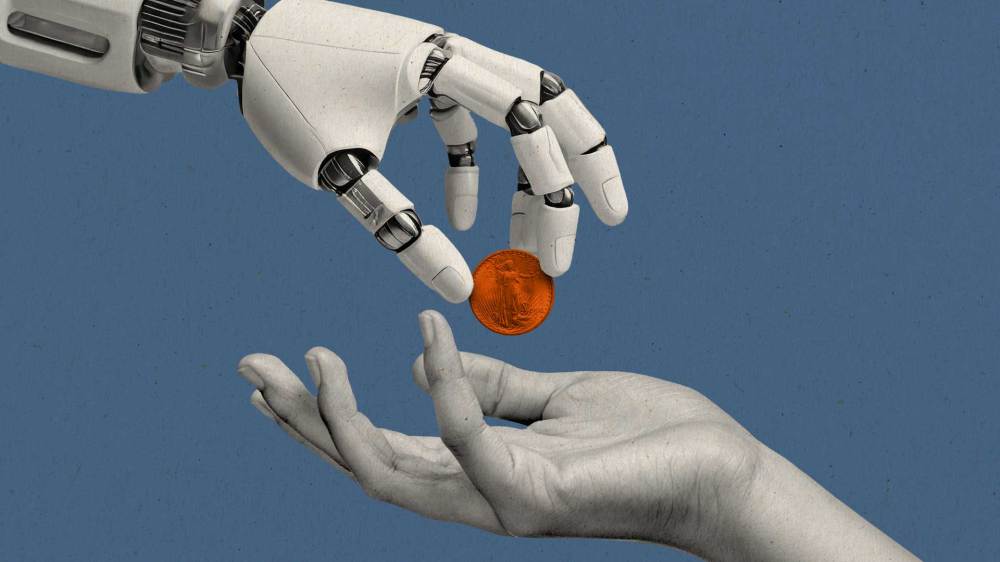 Why haven’t any of Hollywood’s major studios pulled the trigger yet on a licensing deal with the tech giants looking to train their AI models? It turns out there are many reasons. Factors range from considerable legal risks to fears of repeating a grave strategic error Hollywood made in its first dealings with Netflix. But one of the biggest concerns is a simple one: price.
Source: How Much Should AI Giants Pay Hollywood? What Insiders Say Has Stalled Any Licensing Deals
Startup using blockchain to prevent copyright theft by AI valued over $2 billion after fresh funding
 San-Francisco-based startup Story said Wednesday that it raised $80 million of funding for a blockchain designed to prevent artificial intelligence makers like OpenAI from taking creators’ intellectual property without permission. Story said that it raised the funds in a Series B round — typically the third major round of funding in a private startup’s growth journey after seed and Series A — led by Andreessen Horowitz, which is also known as a16z.
A new web crawler launched by Meta is quietly scraping the web for AI training data
 The crawler, named the Meta External Agent, was launched last month according to three firms that track web scrapers and bots across the web. The automated bot essentially copies, or “scrapes,” all the data that is publicly displayed on websites, for example the text in news articles or the conversations in online discussion groups.
Source: A new web crawler launched by Meta last month is quietly scraping the web for AI training data
AI researchers call for ‘personhood credentials’ as bots get smarter
 In a paper, published online last week but not yet peer-reviewed, a group of 32 researchers from OpenAI, Microsoft, Harvard and other institutions call on technologists and policymakers to develop new ways to verify humans without sacrificing people’s privacy or anonymity. They propose a system of “personhood credentials” by which people prove offline that they physically exist as humans.
Source: Analysis | AI researchers call for ‘personhood credentials’ as bots get smarter
Anthropic asks court to ‘prune’ Universal lawsuit to focus on fair use’
 In a filing with the US District Court for the Northern District of California, Anthropic – which has received multi-billion-dollar investments from Amazon and Google – asked the court to dismiss three of the four counts brought against it last fall by UMPG, Concord Music Group and ABKCO. Anthropic describes many of the claims against it as “implausible and supported by threadbare and conclusory allegations.”