 Taylor Swift‘s company, TAS Rights Management, has filed applications to trademark her voice in the UK, the European Union, and Australia. The new filings, spotted by MBW, follow three applications that the company submitted to the US Patent and Trademark Office (USPTO) in April. Those US applications covered recordings of Swift saying “Hey, it’s Taylor” and “Hey, it’s Taylor Swift,” along with a photograph of her holding a pink guitar on stage.
Source: Taylor Swift expands voice trademark filings to the UK, EU, and Australia
 Lawsuits can stop particular conduct, impose consequences, and establish important precedents. They can also end in private agreements that leave the central questions unanswered for everyone else. A settlement tells us that the parties have found terms they can accept. It does not tell us that musicians have acquired a future they can live with. Copyright needs to be completely reconceptualized and recreated in the United States and across the world.
 The UK’s Copyright Tribunal has ruled in favor of PRS for Music in its dispute with the UK Cinema Association (UKCA) over the licensing of music in cinemas, according to the society. In an announcement on Monday (October 12), PRS said the Tribunal had approved changes to its cinema tariff, known as Tariff C, including an increase in the royalty rate cinemas pay to use its members’ music.
 The New York Times, Agence France-Presse and The Economist on Monday joined more than 40 publishers in a coalition aimed at preventing AI firms from using or profiting from their content without permission. The Standards for Publisher Usage Rights (SPUR) coalition, launched in February, now has more than 80 members across over 20 countries. New members include The Atlantic and Brazil’s National Association of Newspapers, joining founding members such as the Financial Times, BBC and Associated Press.
 Australian voters would prefer changes to copyright law that deliver some compensation to creatives rather than free-riding by AI companies training their models offshore, according to a new poll. A YouGov poll of 1,500 people, commissioned by Diffusion, a strategy practice that researches public attitudes to AI, adds to calls from a bipartisan parliamentary inquiry into AI urging Prime Minister Anthony Albanese to make changes to help AI companies who want to train their models in Australia.
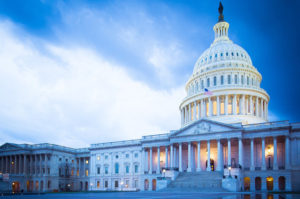 The two competing pirate site-blocking bills that were introduced in Congress recently take different approached. While Rep. Darrell Issa’s ACPA targets VPNs and provides broad liability protections to Internet service providers, the bipartisan and bicameral DEFEND IP Act explicitly excludes VPNs, while covering more smaller ISPs. For more than a decade after the SOPA protests, pirate site blocking was a subject U.S. lawmakers preferred to avoid.
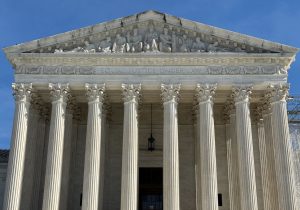 The majors and BMG have told the US Supreme Court that it should not let “one Fifth Circuit decision radically disrupt copyright worldwide”, as they push the justices to overturn a ruling won by songwriter Cyril Vetter. That January 12 ruling held that termination under US law returns an author’s rights across the world, and not only in the United States. The publishers say the industry is “actively negotiating deals running through 2072“, and that Vetter concedes foreign rights “represent a significant factor in those negotiations”.
 At the pearly gates, Dolly Parton, in a sparkling gown, stands arm in arm with Tim Curry, dressed as Dr. Frank-N-Furter. “I knew I chose the right plus one,” Parton says to God, who is standing at heaven’s reception desk. In the bottom right corner of the cartoon is the pen name “BLOPER,” the signature of New Yorker cartoonist Brendan Loper. But Loper didn’t draw the cartoon, or sign it. It was generated by ChatGPT and first posted to Facebook by a Dolly Parton fan.
 The global artificial intelligence race is no longer defined solely by compute power and algorithmic breakthroughs. It is increasingly shaped by national copyright policies governing the ingestion of training data. As model builders race toward artificial general intelligence, they can run into a messy geopolitical question: how free are you to scrape the open web without paying the creators of the content behind it?