Rights

Anthropic’s Leaked Code Tests Copyright Challenges in A.I. Era

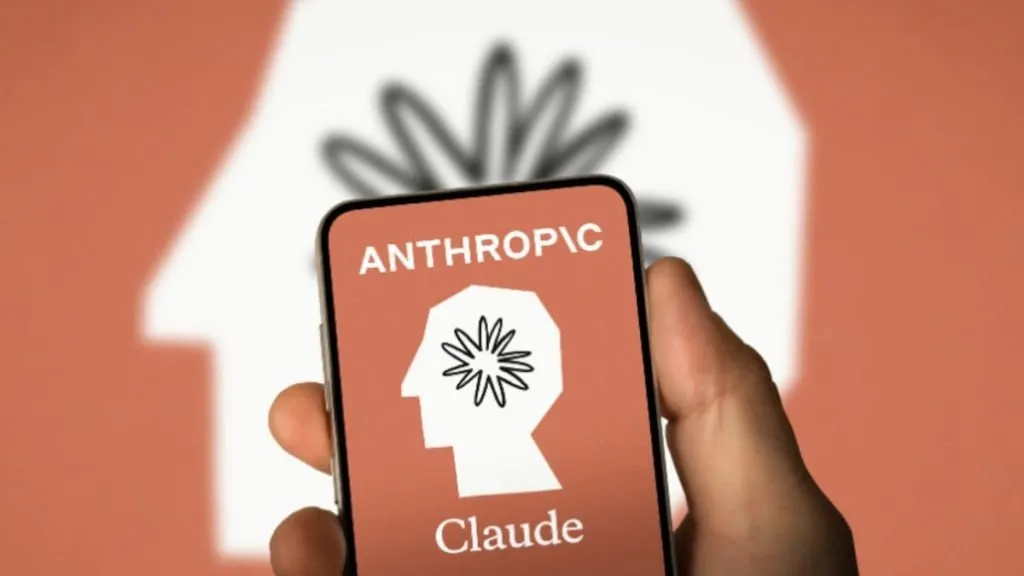
For many software companies, as well as authors, artists and musicians, the risk is not just direct copying. It’s that the market for their work could be flooded with A.I.-generated substitutes that cost almost nothing to produce. “What happened with the Claude Code leak is essentially a preview of what’s coming for every creative industry,” said Russ Pearlman, a lawyer specializing in A.I. and technology. Existing copyright rules, he said, were built on the assumption that copying takes time and that there’s a meaningful window to take action to protect a work.

Source: Anthropic’s Leaked Code Tests Copyright Challenges in A.I. Era

YouTube expands its AI likeness detection technology to celebrities

The technology works similarly to YouTube’s existing Content ID system, which detects copyright-protected material in users’ uploaded videos, allowing rights owners to request removal or share in the video’s revenue. Likeness detection does the same, but for simulated faces. The feature is meant to help protect creators and other public figures from having their identities used without their permission — a common problem for celebrities who find their likenesses have been used in scam advertisements.

Source: YouTube expands its AI likeness detection technology to celebrities

Anthropic Argues for Fair Use in UMG’s AI Lawsuit: ‘Training on Lyrics Is Transformative’

UMG and the other music companies urged a federal judge last month to find that Anthropic’s use of its intellectual property was not “fair use” — a legal tenet that excludes “transformative” uses of a work from copyright protection. Now the AI giant is hitting back, saying in a Monday (April 20) brief of its own that the publishers cannot “meaningfully dispute that training on lyrics (and other copyrighted text) is transformative.”

Source: Anthropic Argues for Fair Use in UMG’s AI Lawsuit: ‘Training on Lyrics Is Transformative’

UK publishers urge CMA to curb Google

News publishers have disputed a claim from Google that using their content to “fine-tune” its AI models contains “no realistic prospect of harm” to them. Google told the UK’s Competition and Markets Authority that there is “no realistic prospect of harm to publishers in respect of training/fine-tuning of AI models for search and search generative AI features. “Fine-tuning helps the model learn how to process information rather than what current information to display.”

Source: UK publishers urge CMA to curb Google

UMG, Concord Slap Quince with Major Lawsuit Over TikTok, Instagram Infringement Allegations

Universal Music Group (UMG) and Concord Music Group, along with Capitol Records and six Universal Music Publishing entities, have filed a copyright infringement lawsuit against popular direct-to-consumer fashion startup Quince. According to the filing, Quince has used over 130 copyrighted works—including 67 sound recordings and 71 musical compositions—that were allegedly used without authorization in TikTok and Instagram posts.

Source: UMG, Concord Slap Quince with Major Lawsuit Over TikTok, Instagram Infringement Allegations

NYC Mayor Zohran Mamdani Earned Over $1,600 in Rap Royalties Last Year

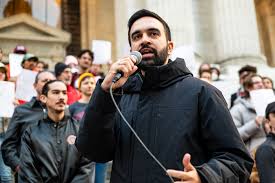
New York City Mayor Zohran Mamdani saw renewed interest in his short-lived rap career after his mayoral candidacy. The music he recorded as Young Cardamom and Mr. Cardamom earned him $1,643 in royalties last year, according to The New York Times. But he actually had recent success as a rapper even before his mayoral run, reporting another $1,267 in royalties in 2024, while he was a member of the New York State Assembly.

Source: NYC Mayor Zohran Mamdani Earned Over $1,600 in Rap Royalties Last Year

Anthropic Settlement Hearing Comes into Focus

On Friday, the Authors Guild took a dive into how the numbers break down. According to papers filed by attorneys for the authors, 440,490, or 91.3%, of the eligible works had been claimed by last month’s deadline, compared to what the Guild says is a typical 10% rate in most class action lawsuits. That 91% rate is a huge increase over 54% of claims attorneys for the class reported on March 19.

Source: Anthropic Settlement Hearing Comes into Focus

Musicians Respond to Calls For PRS to Reduce License Fees

The U.K.’s main musician and songwriter trade associations have responded to calls for PRS to reduce its blanket license fees for grassroots music venues. On Tuesday (April 14), the Music Venue Trust launched a campaign titled Set The Record Straight: Fair Licensing Fees, aimed at examining how PRS For Music’s licensing charges are calculated, applied and enforced across the U.K.’s grassroots live music circuit.

Source: Musicians Respond to Calls For PRS to Reduce License Fees

As Blockbuster Catalog Sales Slow, Dealmaking Volume Holds Steady

High-profile sales haven’t ceased; Miranda Lambert recently sold her catalog to Sony Music Publishing (plus Domain Capital), and the Quincy Jones estate partnered with HarbourView, for instance. Meanwhile, Warner Music’s poised to announce some presumably huge purchases, and DMN’s picked up on a couple noteworthy transactions that should soon receive public announcements. But in general, growing list of IP-heavy company buyouts aside, smaller-scale purchases are taking center stage.

Source: As Blockbuster Catalog Sales Slow, Dealmaking Volume Holds Steady

The Licensing Mirage: Why Collective Models Won’t Save the Visual Industry from AI

The EU’s framework for collective licensing rests on Extended Collective Licensing, or ECL. Under ECL, a CMO is authorized by law to license works on behalf of all rightsholders in a given category — even those who never signed up. The idea is elegant: one blanket license, one payment stream, universal coverage. The trouble starts with what happens after the money is collected.

Source: The Licensing Mirage: Why Collective Models Won’t Save the Visual Industry from AI

Get the latest RightsTech news and analysis delivered directly in your inbox every week
We respect your privacy.