
 District Judge Analisa Torres has rejected the interlocutory appeal request, indicating in part that the “MLC has not met its burden to show that there is a ‘substantial ground for difference of opinion’ as to the Court’s dismissal order.” “The Court adheres to its opinion that the plain text of § 385.2 leaves no ambiguity as to whether Premium combines ‘one or more products or services’ having ‘more than token value’ with a subscription music streaming service,” Judge Torres wrote.
Source: Federal Judge Rejects MLC’s Interlocutory Appeal Push in Spotify Bundling Battle
 Almost a day after the Justice Department filed paperwork in federal court backing
 In a lawsuit that The New York Times filed against OpenAI, the Trump administration has contributed a 20-page brief in defense of the ChatGPT maker’s unlicensed use of copyrighted material to train its LLMs. “The United States has a strong interest in continuing to develop a robust and competitive artificial intelligence industry that sets the standard for the practice and procedure of AI use globally… As such, it is critical for the United States to ‘retain global leadership in artificial intelligence,’” the brief reads
 The Court of Justice of the European Union (CJEU) tackled these questions in its judgment of 9 July 2026 in Anne Frank Fonds v Anne Frank Stichting and Others (Case C-788/24). Its answer is both technologically pragmatic and legally significant: effective geo-blocking can define and restrict the group of internet users to whom an online work is communicated, and the mere possibility that such restrictions may be circumvented using a VPN does not necessarily result in a communication to the public in the protected territory.
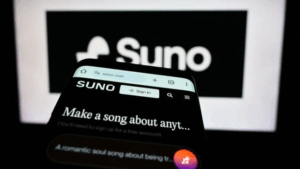 Jason Isbell is suing AI music company Suno over the alleged commercial use of his identity. The six-time Grammy winner filed a proposed class action on Monday (August 31) in Boston federal court, alongside Cracker and Camper Van Beethoven frontman David Lowery, Texas blues musician Guy Forsyth, and Florida saxophonist Eduardo Calle. Interestingly, the 84-page lawsuit contains no copyright claim.
 Sony Music Publishing and Warner Chappell Music have joined forces to sue Anthropic, home of Claude, over what the publishers call “one of the largest and most blatant ongoing thefts of intellectual property in history.” The complaint also names Anthropic Co-Founder and Chief Executive Officer Dario Amodei and Co-Founder Benjamin Mann as individual defendants. It was filed on Friday (August 28) in the US District Court for the Northern District of California.
 Imagine a scenario where a documentary filmmaker, in the course of making the documentary, captures some damning footage of corporate malfeasance, which she wishes to share with an investigative reporting organization anonymously. Should we be concerned that mandates on AI watermarking might reveal who she is, even if she’s not using AI at all? This doesn’t mean that watermarking shouldn’t be used, but rather, as WITNESS notes, we should be aware of the risks, and seek to counter them.
 Streaming platform Twitch and its parent company Amazon are facing a proposed class action lawsuit filed by a Connecticut-based streamer over claims that the companies harvested creators’ content without informing or compensating them to train Amazon’s artificial intelligence programs. According to the filing, streamer and class representative Warren Pandiscia alleges that Amazon began scraping video streams for training purposes before Twitch updated its terms of service to address AI data use, which included an opt-out option for creators.
 AI companies are now required to make model outputs detectable as AI-generated under Article 50 of the EU AI Act – or, in other words, watermarked. Responses, however, have been mixed. While Anthropic stated it has seen no notable drop in usage, sentiment has reportedly been shifting, as per Forbes. Some users are concerned that the watermark can appear on text they have only used Claude to edit, making it indistinguishable from wholly generated text and resulting in reputational decline.
 Australia passed legislation on Thursday that will force tech giants to pay millions of dollars in levies if they fail to strike commercial deals with local media outlets for news on their platforms. The News Bargaining Incentive taxes the companies 2.5% on their advertising revenues unless they strike agreements. Proceeds from the scheme would be directed to local Australian news outlets, whose content helps drive user engagement and advertising revenue on the tech firms’ platforms.