
 YouTube Music announced Wednesday the rollout of a new labeling system aimed at improving transparency around songs created with the help of generative AI. Now listeners will be able to easily identify tracks created using AI, including those involved in composition and vocals. The label will appear on the player page. Clicking on this label provides additional information about the specific role of AI in the track’s creation.
Source: YouTube Music launches new label for AI-generated music
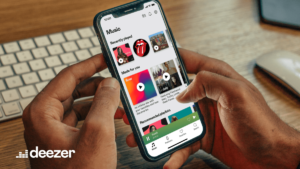 Streaming platform Deezer remains steadfast in its intent to help users avoid listening to AI-generated music: The company on Tuesday said it is working on a new toggle that lets users filter out AI-generated music uploaded to its platform. The feature is expected to be available before the end of the year. Deezer said turning on the toggle will stop you from seeing AI-generated tracks, albums, and related artists in search results.
 This week, a new organization called the American Entertainment Alliance will begin publicly pushing for legislation to force the biggest entertainment and streaming companies — including Netflix, Disney, Amazon Prime Video and Skydance — to allocate half of their original content budgets to shows and movies from independent producers in the United States. The group’s supporters believe that if the biggest streamers buy a sizable share of programming from outside their own companies, it will reignite the television marketplace.
 Artificial intelligence (AI) technologies are at the forefront of the global publishing industry’s concerns, amidst the rapid transformations taking place in the book sector. This is reflected in the discussions and trends at the Frankfurt International Book Fair, one of the world’s leading gatherings for publishers, authors, and distributors. Technological advancements are creating a new reality in the publishing market, with increasing reliance on digital tools for content creation, editing, translation, and marketing.
 It’s a well-known fact at this point that music publishers, particularly in the United States, led by the National Music Publishers Association (NMPA), have furiously decried Spotify’s audiobook bundle as a scheme to lower its royalty obligations—especially its mechanical royalty payments to songwriters and publishers. Nonetheless, the statistics are clear: Spotify reports that more than a million users have subscribed to its Audiobooks+ tier to date.
 Reddit is shutting two of the main ways outsiders pull data from the site. The company said in an announcement yesterday that RSS feeds will stop working on November 13, and public access to its API closes in March 2027. “In August, we shared plans to modernize Reddit’s infrastructure, build better mod tools, and make it harder for bad actors to scrape Reddit and abuse communities. Today, we have specifics on what’s changing, when, and how to plan ahead,” Reddit said.
 At a time when artificial intelligence-generated songs are topping Billboard charts, creating a scary and confusing conversation for many in Nashville’s music industry, one company just off Music Row is using the technology to help artists recover money they’ve already earned. Muserk uses patented AI systems to search through billions of lines of streaming data from platforms like YouTube, Spotify and Apple Music to find royalties that songwriters and artists may not have received.

 More and more, Hollywood
 The company has commissioned a survey of 1,070 business executives in the UK about how their companies use music, estimating that around 800,000 business locations there play music every day. However, 86% of those companies are playing that music through regular streaming services – Spotify, Apple Music, YouTube Music and Amazon Music are all popular options – despite those consumer services not being licensed for business use.