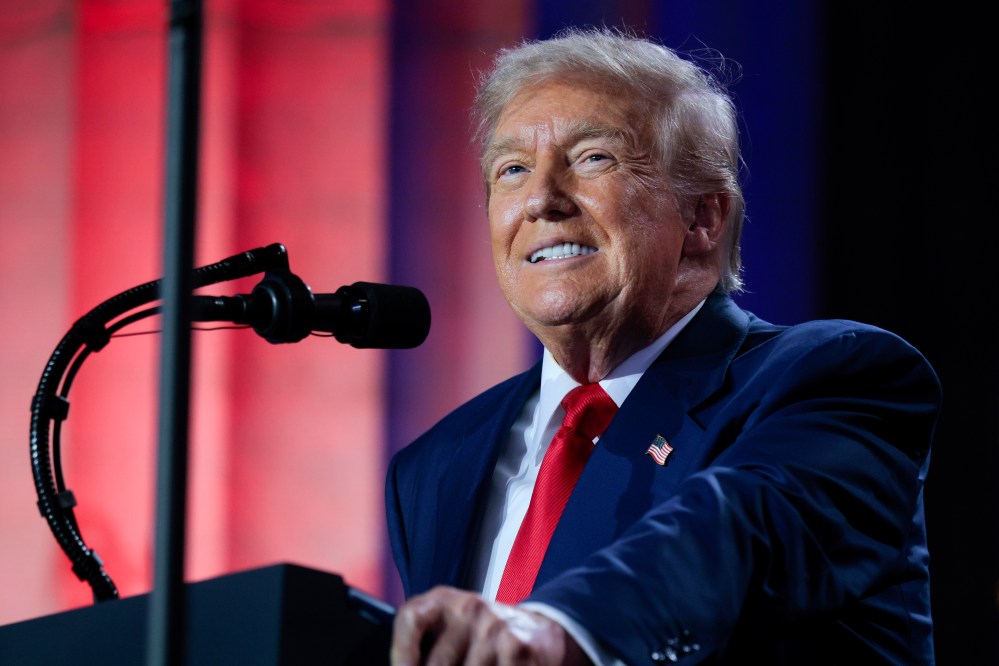
 President Trump waded into the complex issue of paying copyright holders whose works are used for AI training, saying it is impractical and would put the U.S. at a disadvantage to China. “You can’t be expected to have a successful AI program when every single article, book or anything else that you’ve read or studied, you’re supposed to pay for,” Trump said. “You just can’t do it, because it’s not doable.”
Source: Trump Rejects Idea of Paying Copyright Holders for AI Training: ‘It Just Doesn’t Work That Way’


 A broad coalition of groups representing European writers, performers, producers and publishers issued a joint statement on Wednesday, warning that Europe’s AI Act is not properly protecting copyrights. In a joint statement, groups, including those representing European actors, writers, journalists, film producers, musicians, translators, and visual artists, took aim at the implementation of the act, which was passed last year and hailed as the world’s first and most far-reaching government regulation of artificial intelligence technology.
 An estimated 5.6% of U.S. search traffic on desktop browsers last month went to an AI-powered large language model like ChatGPT or Perplexity, according to Datos, a market intelligence firm that tracks web users’ behavior. That pales beside the 94.4% that still went to traditional search engines like Alphabet’s Google or Microsoft’s Bing. But the percentage of traffic that went to browser-based AI search has more than doubled since June 2024,
 This technology could enable proper attribution and compensation for original songwriters, composers and rightsholders, Orfium said. The project comes as the Gen AI music and audiovisual content
 According to a statement released on Tuesday (July 22), Concord is issuing $1.765 billion in bonds via a series of new five-year, seven-year, and ten-year senior notes. The bonds are backed by Concord’s catalog of over 1.3 million music copyrights. The latest bond issuance represents Concord’s fourth securitization offering and is claimed to be “the largest and longest tenured asset-backed term securitization of music rights to date”.