The U.S. Patent and Trademark Office last week held its second public meeting on Developing the Digital Marketplace for Copyrighted Works, where one of the topics of discussion was whether and how works authored by a computer running artificial intelligence software should be regarded for purposes of copyright law (disclosure: I was an informal adviser to the PTO on the program for the event).
The question is not merely academic. Companies like Amper Music in the U.S. and Aiva Technologies in Luxembourg are using A.I systems today to create original production music, while Google engineers have taught A.I. systems to create music and art, and to take photographs that professional photographers have trouble distinguishing from professional landscape shots. Works created at least in part by machines are already entering the stream of commerce.

KlarisIP managing partner Edward Klaris
There is a broad, although not universally shared, consensus among legal experts that under U.S. copyright law, non-human actors, whether machine or monkey, cannot be considered to own a copyright. But that still leaves a host of vexing questions likely to occupy courts for many years. If the machine cannot own the copyright on a machine-made work, can anyone, and if so, whom? The owner of the machine? The author of the software program? The human who pushes “start”? Or, should machine-made works be considered in the public domain?
If a copyright is to be assigned, how much creative input must a human provide, and at what stage of the process, to claim it? If there is no copyright, what if any other legal basis is there for licensing their use?
At the Digital Entertainment World conference in Los Angeles February 5-6, KlarisLaw and KlarisIP managing partner Edward Klaris will explore some of those questions in a special presentation called From Art to Artificial Intelligence.
Klaris previewed some of his thoughts on the topic in a blog post this week for Intellectual Property Watch:
The concept of encouraging the production of creative work by protecting it — incentivizing authors financially — is embedded in our Constitution. The Intellectual Property Clause expressly aims “to promote the progress of science and useful arts, by securing for limited times to authors and inventors the exclusive right to their respective writings and discoveries.”
In drafting the black-and-white clarity of this clause, our framers could hardly have anticipated the highly gray area of bots making copyrighted works. You don’t have to incentivize a bot; a machine simply does what it was programmed to do without any need for financial motivation. That is why the court declined to award a copyright in a work created by a monkey. Monkeys are not financially incentivized to create works, and even if they were, the monopoly afforded copyright holders was not intended for animals.
In a world where bots may eventually dominate the creative space — manipulating, arranging, color-correcting, filming, and ordering literary, audio and visual content – courts may decide that works created without human input belong in the public domain with no protection. Or, if copyright is granted, bots’ output would be protected for potentially more than 100 years under current copyright law. Which is better? What path best promotes our country’s fundamental interest in “the progress of science and useful arts”? And, should copyright subsist for fewer years under certain circumstances?
Klaris’ presentation will be held on February 6 as part of the RightsTech track at DEW. To view the full RightsTech agenda click here. For information on how to register for the event click here.
 The bill is meant to address one of the abiding sources of friction within the digital music streaming business. Musical compositions in the U.S. are subject to a compulsory mechanical license, meaning anyone can record a song and sell copies of that recording by sending a notice of intent (NOI) to the composition’s copyright owners and paying a per-copy royalty set by the Copyright Royalty Board.
 David Israelite: We have a window of momentum and consensus that is ripe for action. Congressional leaders like Judiciary Committee Chairman Bob Goodlatte, who retires this year, has made copyright reform a priority, and with songwriter champions like Rep. Doug Collins (R-GA) and Rep. Hakeem Jeffries (D-NY) offering consensus bills like the MMA – and the Senate hopefully following suit – there is a real opportunity to move legislation that will significantly help the future of songwriting. Additionally, the MMA is not a wish list for music publishers and songwriters – it is a bill that took months to negotiate because it helps both the tech and music industries. No one got everything they wanted – but both sides are better off with the MMA. DiMA, which represents the biggest tech companies in the world is supportive, as are the biggest songwriter groups in the U.S.
 The RightsTech Project has been advising the Department on the program and speakers for the meeting and will be participating in the event. RightsTech members are invited to contact Paul Sweeting (paul@concurrentmedia.com) to learn more about the event and potential speaking opportunities.
 Last week, the Australian government unveiled legislation to extend the current digital safe harbors there to libraries, educational institutions, organizations for the disabled, archives, and other cultural sectors. But in a reversal from a previous government position, the legislation would
  Apart from trading Bitcoin, just about the hottest application running on a blockchain at the moment is
  In one of his first acts as president, Trump pulled the U.S. out of the Trans-Pacific Parternship (TPP), the 12-nation pact originally intended to enshrine U.S. economic influence in Asia and throughout the Pacific Basin. To the dismay of many technology companies and consumer rights groups, the treaty’s intellectual property chapter, drafted largely by U.S. negotiators working in close consultation with U.S. copyright interests (and the pharmaceutical industry), contained a number of provisions requiring other countries to adopt strong U.S.-backed copyright protections, including anti-circumvention rules for technical protection measures, enhanced enforcement procedures and remedies, including for secondary liability, and extended terms for copyright.
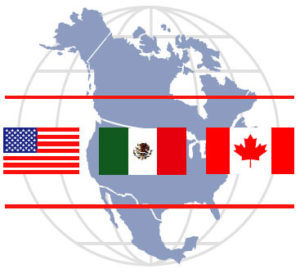 History shows that “having another deal already in place or almost in place certainly strengthens your hand” in trade negotiations, the director of the Mexico Institute at the Wilson Center, Duncan Wood,
 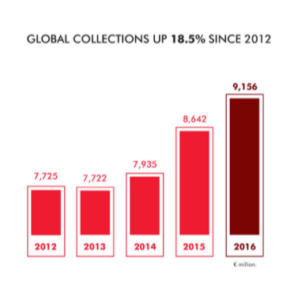 Music royalties, which make up the bulk of CISAC-member collections, rose 7 percent for the year, to €8.0 billion (US $9.4 billion) powered by rapid growth in streaming services in several major markets. The U.S. and Canada saw the biggest increase, at 12.5 percent, followed by the Asia-Pacific region, which grew 10.3 percent.
 The RightsTech Project will host a dedicated track of panels, presentations, and keynotes on each day of the expo, while attendees will enjoy access to the entire two-day expo, including tracks on movies and television, games and interactive entertainment, brands and advertising, VR and AR, and more.
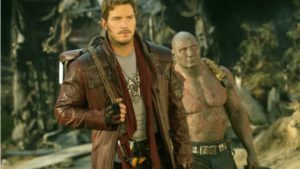 The studio defendants, Disney, Fox and Paramount, do not dispute that the MOVA technology may have been stolen. But they strongly reject the claim that the owner of MOVA, whether Rearden or someone else, also owns the copyright on the work it produces. What show up on the screen, they claim, is chiefly the result of human inputs, from the film’s direction, the performances of the actors, and the photography of the cinematographer. To argue that the owner of the effects software also owns its output, the studios say, makes no more sense than arguing that Microsoft owns the copyright on any work produced using Word, or Adobe any work produced in Photoshop.