 NFTs don’t themselves convey any intellectual property rights, unless a contract specifically provides those rights and vests them in ownership of the token. But that hasn’t stopped many NFT buyers from trying to convince themselves and others that owning a shoe, screenplay or some other form of intellectual property gives them the right to mint digital assets off of it.
Rights
Warner Music Adopts SoundCloud Fan-Powered Royalty Model
 About three months after celebrating the anniversary of its fan-powered royalty model, SoundCloud has officially inked a global licensing deal with Warner Music Group. Under the pact, WMG will become the first major label to support payouts based upon actual listening as opposed to a portion of total streams. Multiple artists have offered positive assessments of fan-powered royalties, which deliver the monthly revenue (less fees) of each subscriber or ad-supported user to the creators whose work they enjoyed.
Source: Warner Music Adopts SoundCloud Fan-Powered Royalty Model
Supreme Court of Canada nixes double royalties for streaming or downloading music
S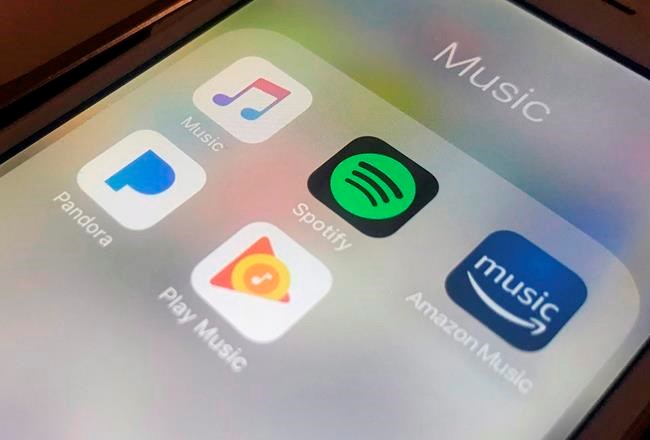 ongwriters are entitled to just one royalty — not two — when their music is streamed or downloaded through an online service, the Supreme Court of Canada has ruled. The top court’s decision Friday clarifies the meaning of a Canadian copyright law provision dealing with communication of a work to the public online. In writing for a majority of the Supreme Court, Justice Malcolm Rowe said the Copyright Act does not exist solely for the benefit of authors.
Source: Supreme Court of Canada nixes double royalties for streaming or downloading music
Bill to Aid Local News Gets Revamp, New Bipartisan Interest
 Senators are gearing up to advance a proposal to empower small news organizations to negotiate compensation from technology giants such as Facebook and Alphabet, people familiar with the discussions said. The US — trailing the European Union and Australia — is inching toward passing its own law after senators appeased unions’ concerns and are poised to win greater bipartisan backing for the measure.
Source: Bill to Aid Local News Gets Revamp, New Bipartisan Interest (1) | Bloomberg Government
YouTube cuts Content ID appeal period from 30 days to seven
 If a creator files a dispute, copyright owners have 30 days to manually review the video and its supposed violation and decide whether Content ID’s flag was accurate. Creators whose disputes are turned down can appeal, asking YouTube and the copyright owner to take another look at their videos. Before today, that appeal period was another 30 days. But now, YouTube is narrowing it to seven days.
Source: YouTube cuts Content ID appeal period from 30 days to seven – Tubefilter
AMRA expands digital licensing reach into Canada
 Digital collection society AMRA has expanded its operations to license on behalf of its songwriters and publishers in Canada. The Kobalt Music Group-owned company says that it is working closely with all digital streaming providers (DSPs) for mechanical rights licensing in Canada and began collecting on April 1, 2022. Since 2015, AMRA has established global licensing agreements with more than 29 DSPs operating a multi-territorial service.
Believe CEO accuses major labels of lobbying DSPs to lower royalty rates for DIY artists
 Are the major record companies trying to pressure music streaming services to pay DIY artists lower royalty rates than those received by established superstars? According to Believe boss Denis Ladegaillerie, yes, they are. He claims that certain majors are pushing for this change because “they’ve been consistently losing market share for the past five years” due to the volume of releases coming out via DIY platforms.
U.S. Copyright Office, Patent and Trademark Office to Launch Study of NFTs
 The U.S. Copyright Office and the U.S. Patent and Trademark Office confirmed that they will carry out a joint effort to examine issues related to non-fungible tokens (“NFTs”) amid rising questions – and legal disputes – centering on the novel technology.
Source: U.S. Copyright Office, Patent and Trademark Office to Launch Study of NFTs
Intellectual Property Risks in the Metaverse: Protection, Jurisdiction and Enforcement
 The digital world may be approaching realism, but it is still an extension of the physical world. Intellectual property issues in the real world will also extend to the metaverse, though there are also opportunities that present themselves in the metaverse.
Source: Intellectual Property Risks in the Metaverse: Protection, Jurisdiction and Enforcement
Why Netflix’s Loss of Licensed Titles Could Spark a Content Crisis
 Many of the most watched shows on Netflix for the U.S. in 2020 and 2021 were licensed series, according to Nielsen, with their total viewing time surpassing even massive hits “Squid Game” and “Ozark.” Those shows included NBC’s “The Office,” which was the most viewed show in 2020 with over 57 billion minutes streamed, and “Criminal Minds,” which topped 2021 with over 33 billion minutes.
Source: Why Netflix’s Loss of Licensed Titles Could Spark a Content Crisis