 The European Union will propose a ban restricting kids under 15 from accessing social media, video sharing platforms such as YouTube, AI chatbots, and even online games, in the broadest-reaching proposal yet to attempt to protect kids from online predators. Companies would be required to pay a supervisory fee to fund regulators’ enforcement and continued supervision.
Source: EU Set to Propose Sweeping Ban on Social Media and More for Kids Under 15
 Two leading progressive lawmakers, Sen. Bernie Sanders and Rep. Greg Casar, are unveiling legislation Wednesday that would ban artificial superintelligence and create a federal agency to oversee advanced AI as some of the industry’s own leaders urge Congress to impose guardrails on the advancing technology. The bill would also pause advanced AI development until guidelines are implemented while creating the Department of Artificial Intelligence. Multiple employees at leading AI companies are endorsing the bill.
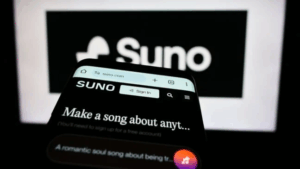 The company set out that description in a statement responding to a second copyright lawsuit filed on Friday (September 18) by Universal Music Group and Sony Music Entertainment in Boston federal court, where the labels’ original case against the company is already being heard. Suno said v6 was trained on “interactions including creations and preference signals” from its community.
 Sony Music Group has joined the Alliance for Responsible Innovation in the Arts & Media, the AI policy coalition better known as ARIAM. It is the first music company to join the group, which launched in June 2026 with members drawn from film, television, journalism, publishing, education, and technology. Sony Music Group says the coalition is focused on advancing responsible AI across the creative and media sectors.
 VPN providers with over 100,000 American users could be ordered to block pirate sites under the bill Rep. Darrell Issa introduced last week. The full text shows that VPNs were added after last year’s discussion draft, which only mentioned ISPs and DNS resolvers. How a VPN should block access “from the United States” remains an open question, as the technical implementation is not defined.
 New unredacted information in the copyright lawsuit The New York Times brought against OpenAI and Microsoft three years ago reveals an admission that AI scraping was tantamount to theft, and that AI products pose a major threat to publications. Per the lawsuit, a top Microsoft executive privately described the companies’ AI training practices as “theft,” and OpenAI’s own leadership said its AI models posed an “existential threat” to publishers and journalists.
 Disctopia was granted a US patent covering its ability to tie creator payouts to verified listening. Streaming fraud continues to plague artists trying to make their fair share of the payout pool, and it’s getting even worse as artificial intelligence improves. But creator monetization platform Disctopia hopes to change that with a new U.S. patent covering technology that measures whether audiences are actually present and engaged and connects that engagement to a creator’s earnings.
 U.S. Representative Darrell Issa has officially introduced a new bill that aims to block foreign pirate sites in the United States. While the final text has yet to be published, an early draft suggests that both ISPs and DNS resolvers will be covered. The bill has already triggered opposition, while there is also internal competition from competing site blocking efforts on the Hill.
 Streaming Access and Choice Alliance is a Washington, D.C.-based lobbying group that says its focus is “promot[ing] high-quality and high-value entertainment experiences for consumers.” What that really means is it’ll chat up Capitol Hill and try to convince U.S. lawmakers that streaming services have the right to sign exclusive air deals with major sports leagues. YouTube, Netflix, Amazon, and other streamers have signed increasingly larger deals to distribute live sports content.
 Samsung has asked a federal judge to throw out Dua Lipa’s lawsuit over the use of her photograph on television packaging. The brief sets out four grounds. The first is that Lipa cannot sue for trademark infringement over a picture of her own face. Lipa sued Samsung on May 8, seeking at least USD $15 million in damages over an image she owns that was printed on the cardboard boxes of TVs sold across the US.