Policy

After Watching 80% of Their Earnings Evaporate, Successful Music Production Duo Sues Suno

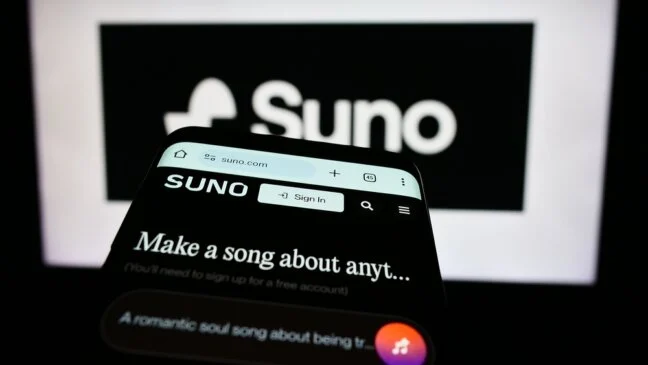
The duo, whose music has been featured by major brands like Apple and in shows like “CSI: Miami,” claims that the resulting flood of AI content has acted as a major market disruptor, decimating their primary livelihood by slashing their licensing revenue by nearly 80% since Suno’s public launch. Their complaint was filed in the US District Court for the Southern District of New York on Tuesday, May 12.

Source: After Watching 80% of Their Earnings Evaporate, Successful Music Production Duo Sues Suno

Anthropic’s $1.5B copyright settlement is getting messy as judge delays approval

After several authors and class members raised objections to Anthropic’s $1.5 billion settlement over its widespread book piracy to train AI, a federal judge has delayed final approvals of the settlement. On Thursday, US District Judge Araceli Martinez-Olguin declined to rubber-stamp what’s regarded as the largest copyright settlement in US history. Instead, she wanted to better understand why some class members were objecting and opting out of the settlement. 

Source: Anthropic’s $1.5B copyright settlement is getting messy as judge delays approval

The Founders’ Case for Human Authorship in the Age of AI

Who should be eligible for the rewards of copyright protection? The answer shapes human activities across an entire society. From a republican perspective, human creation is worth promoting not merely for its outputs, but because a society of people who write, create, and invent is better equipped for self-governance. As law professor Jane Ginsburg explains, every historical justification for copyrights—natural rights, fairness to creators, incentives for innovation, inducements to disclose —presupposes a human creator. That was no accident.

Source: The Founders’ Case for Human Authorship in the Age of AI

Who Owns AI-Generated Content? Documenting the Creation Process Is Critical

Businesses across industries now use generative AI to draft advertising and website text, create images and presentations, generate software code and develop product concepts. As that use becomes more common, so does an increasingly important question: who, if anyone, owns the output? Copyright depends on authorship, which the Court has described as the person “to whom anything owes its origin.” In the AI context, that makes human authorship the central issue.

Source: Who Owns AI-Generated Content? Documenting the Creation Process Is Critical

EU Commission preparing law on licensing content for AI

The European Commission is working on a law focused on the process for licensing creative content – like writing or art – to AI developers, according to a consultation published on Wednesday.  the EU’s executive laid out plans for a “targeted legislative initiative” to complement existing copyright rules. This will weigh different possible levels of intervention, according to the consultation.

Source: EU Commission preparing law on licensing content for AI

Suno fights to keep Warner Music settlement terms away from UMG and Sony

A federal magistrate blocked Universal Music Group and Sony Music Entertainment from obtaining Suno’s settlement agreement with Warner Music Group in April. Now, the AI startup is pointing to the labels’ “mischaracterization” of the ruling as they attempt to reopen the dispute. That’s according to Suno’s response to the labels’ objection to the magistrate judge’s April 6 discovery ruling.

Source: Suno fights to keep Warner Music settlement terms away from UMG and Sony

Federal Judge Orders Reinstatement of NEH Grants

The Authors Guild and other plaintiffs notched a significant victory on May 7, when a federal court in New York issued a permanent injunction against the National Endowment for the Humanities and the Department of Government Efficiency. The court ordered the reinstatement of more than 1,400 NEH grants, representing more than $100 million in congressionally appropriated funds, canceled en masse by DOGE between April 1–3, 2025.

Source: Federal Judge Orders Reinstatement of NEH Grants

What the EU AI Omnibus Deal Changes for the AI Act and What Lies Ahead

Among the more substantial changes, the AI Omnibus introduces a new ban on “nudifier tools.” This was not part of the Commission’s original proposal and is already partially addressed through the Digital Services Act, the Directive on Violence Against Women, and national criminal law. However, the wave of sexual deepfakes generated by Grok last winter — involving millions of cases — prompted both Parliament and Member States to intervene directly at the level of AI models themselves.

Source: What the EU AI Omnibus Deal Changes for the AI Act and What Lies Ahead

Bill in France would force AI firms to prove they didn’t use copyrighted content to train models

A coalition of 81 cultural and media organizations in France — spanning the music, film, publishing, and press industries — has called on the country’s National Assembly to schedule debate on a bill that would create a legal presumption that AI providers use copyrighted content. The bill was adopted unanimously by the French Senate last month. It has since been transmitted to the National Assembly, but has not yet been placed on the legislative agenda, a step the coalition says is now urgent.

Source: Bill in France would force AI firms to prove they didn’t use copyrighted content to train models

Five Publishers and Scott Turow Sue Meta and Mark Zuckerberg

Five major publishers — Hachette, Macmillan, McGraw Hill, Elsevier and Cengage — and the best-selling novelist Scott Turow have filed a class-action copyright infringement lawsuit against Meta and its founder and chief executive, Mark Zuckerberg. The complaint, which was filed on Tuesday morning in United States District Court for the Southern District of New York, accuses Meta and Zuckerberg of illegally using millions of copyrighted works to train their artificial intelligence program Llama

Source: Five Publishers and Scott Turow Sue Meta and Mark Zuckerberg

Get the latest RightsTech news and analysis delivered directly in your inbox every week
We respect your privacy.