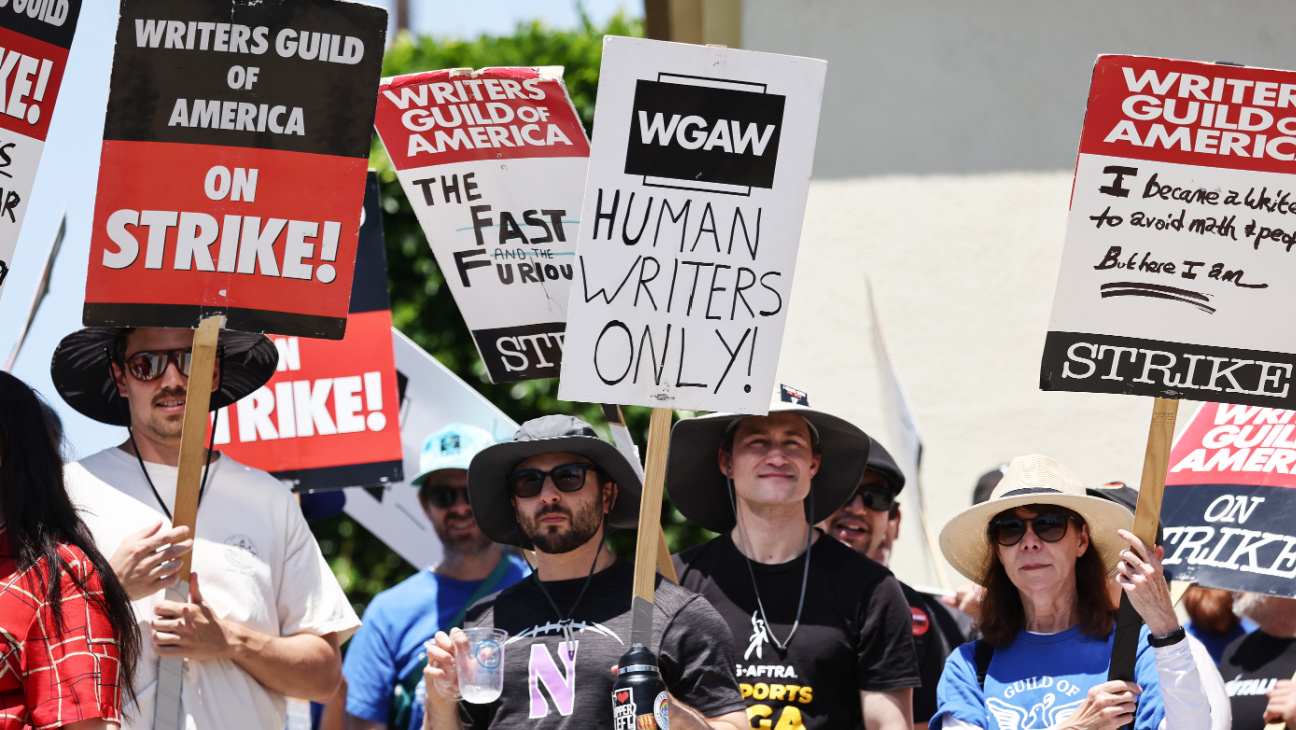
 It was 2022. Layoffs, cost-cutting and what appeared to be an inevitable strike from writers was looming and the industry was in flux. That fall, OpenAI released an early demo of ChatGPT in what became the first momentous moment of the tech entering the public consciousness. Everything changed, starting with “Heart on my Sleeve,” a song that used AI versions of voices from Drake and the Weeknd.
Source: Hollywood’s Divide on Artificial Intelligence Is Only Growing
 The new model does distribute royalties according to titles or hours listened, dividing the value of a member’s plan and any additional audiobook credits used “among the titles the member listened to over the course of the month.” Audible’s new royalty model is a response to Spotify’s encroachment into the audiobook space but it is also an early statement to the publishing world about how the company plans to account to publishers and authors.


 Perplexity AI will soon start sharing advertising revenue with news publishers when its chatbot surfaces their content in response to a user query, a move that appears designed to assuage critics that have accused the startup of plagiarism and unethical web scraping. Dmitry Shevelenko, Perplexity’s head of business, told TechCrunch that the company was actually exploring the program in January, before publishers started leveling accusations.
 YouTube Music is introducing two new ways to boost song discovery on its platform. YouTube announced on Monday that it’s experimenting with an AI-generated conversational radio feature, and rolling out a new Shazam-like tool to help users discover the name of a song by singing, humming or playing parts of it.