 Some authors hoping to receive their share of Anthropic’s $1.5 billion copyright settlement said they received surprising emails this week — emails informing them that someone else was making a claim on their payments. Under the terms of the settlement, the authors will be paid $3,000 for each pirated work. If the book is still in print with a traditional publisher, the money will be split 50-50 between author and publisher. But writers have been posting on social media that publishers seem to be claiming more than their fair share of some payments.
Source: Authors push back as publishers and agents make claims on Anthropic settlement
 The Court of Justice of the European Union (CJEU) tackled these questions in its judgment of 9 July 2026 in Anne Frank Fonds v Anne Frank Stichting and Others (Case C-788/24). Its answer is both technologically pragmatic and legally significant: effective geo-blocking can define and restrict the group of internet users to whom an online work is communicated, and the mere possibility that such restrictions may be circumvented using a VPN does not necessarily result in a communication to the public in the protected territory.
 Walk into a corner of a newsroom somewhere and you can often find it affixed to a bulletin board, perhaps peeking out from behind the coffee pot: the
  Streaming generated USD $4.9 billion, up 4.7% YoY, with paid subscriptions generating $3.4 billion in the period – up 6.4% YoY. The ‘Premium’ subscription part of that equation generated $3.11 billion for rightsholders in H1 2026, up 7.8% YoY. The other half of the equation – ‘non-premium’ subs, largely music bundled into services where music isn’t the main event – fell 9% YoY to $239.1 million.
 Titled “An Empirical Study of the Impact of Library E-Lending on the Book Economy” and conducted by Secretariat Advisors, the report predicts that “decreases in library e-book prices or certain other changes to licensing terms, as required in recent state legislative initiatives, would cause further harm to commercial markets,” including publishers, authors, and booksellers.
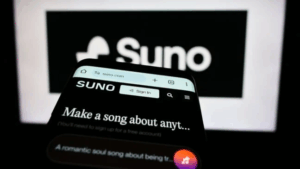 Jason Isbell is suing AI music company Suno over the alleged commercial use of his identity. The six-time Grammy winner filed a proposed class action on Monday (August 31) in Boston federal court, alongside Cracker and Camper Van Beethoven frontman David Lowery, Texas blues musician Guy Forsyth, and Florida saxophonist Eduardo Calle. Interestingly, the 84-page lawsuit contains no copyright claim.
 Over the last ten years, buying music became trendy. The logic was simple: recurring revenue, long duration, emotional resonance. Prices climbed. Multiples stretched. Everyone wanted to jump on the bandwagon. Then the market said enough. The collapse of the Hipgnosis Songs Fund looked, for a moment, like a verdict on music as an asset. It was not. It was a verdict on an over-leveraged fund. Content underneath it was just fine. Music is still the name of the game. What came next proved the point.
 Tech giant Google has been quietly making overtures to the major studios as it tries to find ways to entice Hollywood to use its artificial intelligence technology. Google executives have approached representatives at Disney, Universal, Warner Bros. Discovery and other studios about licensing intellectual property to be used in AI models, according to three people familiar with the conversations who were not authorized to speak publicly about them.
 A group of more than 80 performers, including actor Hugh Bonneville and singer Sandi Thom, have written to the UK government to demand greater protection against their voices being used by AI. Together, they are asking Prime Minister Andy Burnham to introduce legislation that would better protect every person in the UK against voice cloning and AI training on recordings without consent. Audiobook narrator Alice Sockett co-founded the campaign, calling voice cloning “an existential threat to our entire industry.”