Rights

ASCAP Reiterates Call for AI Licensing, Likeness Protections in USCO Filing

In new AI comments submitted to the Copyright Office, ASCAP doubled down on its support for direct licensing and likeness protections. “[A]rmchair speculations about the efficiency of licensing do not justify a rampant disregard for creators’ rights,” the PRO said. “As they have done countless times in the past, licensing models will adapt to the evolving technical environment to ensure that creators are compensated for the use of their intellectual property.”

Source: ASCAP Calls for AI Licensing, Likeness Protections in USCO Filing

AAP Calls Big Tech’s AI Arguments ‘Nonsense’

In comments submitted to the U.S. Copyright Office this week, the Association of American Publishers slammed assertions by the tech industry that fair use permits AI developers to use copyrighted works to train their systems without permission or compensation. In the 15-page document, the AAP offered a blunt characterization of tech companies that, in their initial comments, asserted that “the rights of authors and publishers are an obstacle to innovation,” calling such claims “nonsense.”


Source: AAP Calls Big Tech’s AI Arguments ‘Nonsense’

EU Reaches Provisional Deal on AI Act, Setting Transparency and Enforcement Guidelines

For the entertainment industry, the most crucial aspect when it comes to AI is the requirement for transparency when using generative AI or copyright-protected work. Véronique Desbrosses, GESAC’s managing director, indeed called for a “a robust implementation” of “transparency requirements and respect for EU copyright rules applicable to all models.”

Source: European Union Reaches Provisional Deal on AI Act, Setting Transparency and Enforcement Guidelines

News Publishers Are Fighting Big Tech Over Peanuts. They Could Be Owed Billions (Opinion)

Last week, after months of hardball negotiations, Google and the Canadian government agreed on a deal that would require the company to pay Canadian news outlets about $73.5 million a year. Canadians are no longer facing the threat that Google would remove all news content from its search results. The settlement is far less than Canada wanted — it had sought $126 million — and a small fraction of the estimated $550 million that news publishers deserve from Google

Source: Opinion | News Publishers Are Fighting Big Tech Over Peanuts. They Could Be Owed Billions.

Entertainment Sector Unites to Oppose European Law That Would Ban Geo-Blocking

More than 600 film and TV companies from across Europe, as well as representatives of Hollywood studios, sports leagues, film festivals and film and TV markets, have signed a letter in opposition to proposed legislation that would ban geo-blocking across the European Union. Next Wednesday, Dec. 13, the European Parliament will vote on whether to adopt a proposal that would see audio-visual content, from Hollywood films to French TV series to English soccer games.

Source: Entertainment Sector Unites to Oppose European Law That Would Ban Geo-Blocking

Mechanical Licensing Collective Debuts Royalty ‘Matching Network’

The Mechanical Licensing Collective has debuted a ‘Supplemental Matching Network’ through which five companies will help match royalties. The MLC says it chose these businesses – London-based Blokur, credits database Jaxsta (now part of the overarching Vinyl Group), Too Lost-partnered Pex, Session parent Salt, and SoundExchange’s SX Works – based upon the results of a “comprehensive selection process” that encompassed pilot programs.

Source: Mechanical Licensing Collective Debuts Royalty ‘Matching Network’

EU ‘final’ talks to fix AI rules to run into 2nd day; deal on foundation models at hand

The text of the proposal requires foundational model makers to put in place a policy to respect EU copyright law, including with regard to limitations copyright holders have placed on text and data mining. Plus they must provide a “sufficiently detailed” summary of training data used to build the model and make it public — with a template for the disclosure being provided by the AI Office, an AI governance body the regulation proposes to set up.

Source: EU ‘final’ talks to fix AI rules to run into second day — but deal on foundational models is on the table | TechCrunch

UK Patent Office AI ruling: ‘A whole new era’ 

A recent ruling in the English High Court could be significant for AI companies – music-tech startups included. The ruling last month overturned a previous decision by the UK Patent Office. The change means that startups can now patent their training mechanisms, as well as their final trained systems. “AI music startups couldn’t patent their innovations before because they were being misinterpreted through a legacy vocabulary and understanding,” Dacci CEO Rachel Lyske said.

Source: Daaci hails AI patents ruling: ‘Welcome to a whole new era’ – Music Ally

HarbourView ups credit facility capacity by $100m to buy more music rights

Under the amended facility, HarbourView’s credit facility capacity has been increased by $100 millionto $300 million(from $200m). The firm says that it will use the additional funding to continue acquiring music royalty assets and for “general corporate purposes”. HarbourView has been particularly active in the music rights-buying space over the past few months.

Source: HarbourView ups credit facility capacity by $100m to buy more music rights

AI-Generated Jimmy Stewart Narrates Bedtime Story for Calm App 

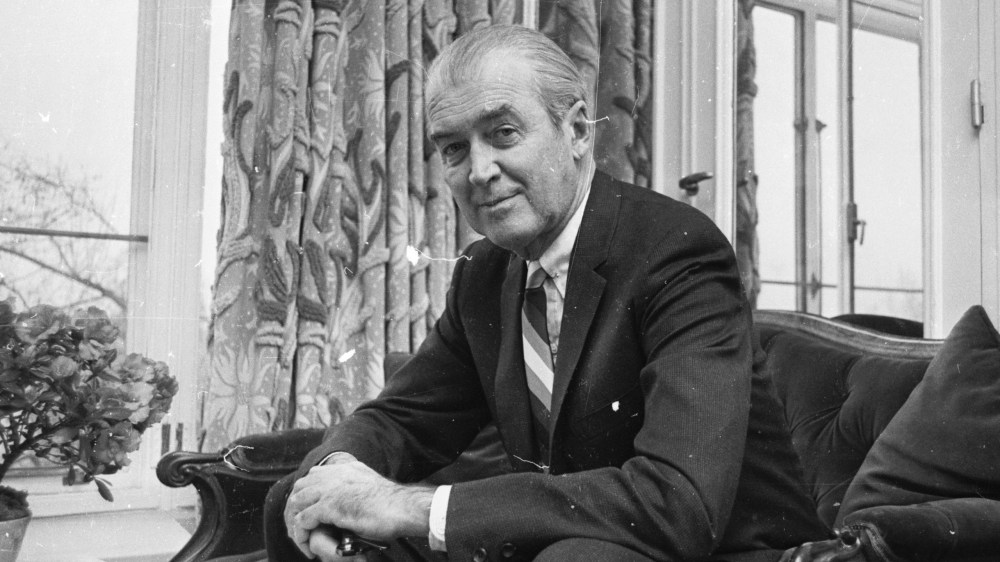
An AI-generated voice of Jimmy Stewart, the legendary Hollywood actor who died in 1997, reads a new bedtime story on the Calm sleep and meditation app. The voice of Stewart, who starred in films including “It’s a Wonderful Life,” “Vertigo” and “Rear Window,” was recreated for the Calm story using AI voice-cloning technology. The project has the consent of Stewart’s family and his estate (managed by CMG Worldwide).

Source: AI-Generated Jimmy Stewart Narrates Bedtime Story for Calm App (EXCLUSIVE)

Get the latest RightsTech news and analysis delivered directly in your inbox every week
We respect your privacy.