
Marketplace

Souring on Streaming, Hollywood Falls Back in Love With Movie Theaters

In recent years, Hollywood had a serious case of Netflix envy, with studios opting to launch their own streaming services. To do that, they amassed a lot of red ink building splashy streaming shows and shrunk the amount of time that movies screened exclusively in cinemas as a way of generating enthusiasm for the likes of Disney+, Paramount+ and HBO Max. But lately, Wall Street has soured on the economics of streaming.

Source: Desperate for Profits and Souring on Streaming, Hollywood Falls Back in Love With Movie Theaters

Can Streamers Slow Down Production And Retain Network Subscribers?

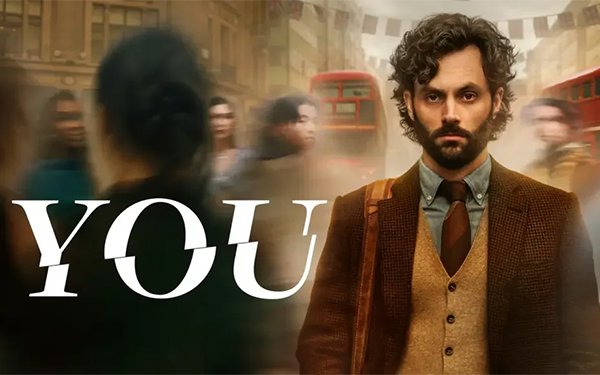
Slow down your streaming TV and movie consumption. That may the new message from premium streaming services in the coming years, as all look to moderating production costs due to a maturing market. One bit of news really raises the volume on this: Netflix has commissioned a “pilot” for the first time for a comedy series called “Little Sky.” So what, you say? Well, Netflix has been in the business of commissioning entire TV seasons of a TV series, not just one episode.

Source: TV Watch: Can Streamers Slow Down Production And Retain Network Subscribers?

Global Music Streams Topped One Trillion During Q1 2023: Report

Despite signs that streaming subscriber and revenue growth is leveling off, music-consumption volume continued to increase during 2023’s initial quarter, when global music streams reportedly cracked the one trillion mark. The telling data point just recently came to light in a brief release from Luminate (formerly P-MRC Data). According to the company, worldwide on-demand audio streams topped one trillion on March 31st, thereby rendering 2023 “the fastest year yet to reach that milestone.”



Source: Global Music Streams Topped One Trillion During Q1 2023: Report

As streamers cut costs, TV shows — and residuals — vanish

Erasing original shows from their libraries can help streamers get tax write-downs and, to a smaller extent, save on residual payments. But it brings criticism that they are sidelining already marginalized voices and shortchanging creatives out of already slimmer residual paychecks. These issues have increased tension between executives and writers amid union contract negotiations that started late last month and could lead to a significant work stoppage this spring.

Source: As streamers cut costs, TV shows — and residuals — vanish

BPI’s new report explores more streaming stats for UK artists 

The Parliamentary committee’s report in July 2021 suggested, a ‘complete reset’ of the streaming market. But since then, British labels body the BPI has been energetically pressing its key points. Its latest effort was published this morning: a report called ‘The New Music Democracy: How More Artists Are Benefitting From Streaming’. The title is a neat summary of its contents, and indeed the key lobbying points it aims to hammer home. That said, it’s still a useful roundup of what labels see as key success metrics for the world’s third largest recorded-music market.

Source: BPI’s new report explores more streaming stats for UK artists – Music Ally

Is Writer Pay Up or Down? Depends How You Look at It

In 2001, median pay in film and TV was roughly the same: $108,000 in TV, $105,000 in film. By 2014, the last year available, median TV writer earnings had grown to $138,000, while median film writer pay had dropped to $77,000 (all in 2021 dollars). Meanwhile, the number TV writers has increased dramatically, while the number of film writers has remained almost flat. (Some writers work in both mediums, so the total number of working writers is less than the sum of TV and film writers.)

Source: Is Writer Pay Up or Down? Depends How You Look at It

As major label market share falls on Spotify, can we expect even more indie investment from the ‘Big Three’?

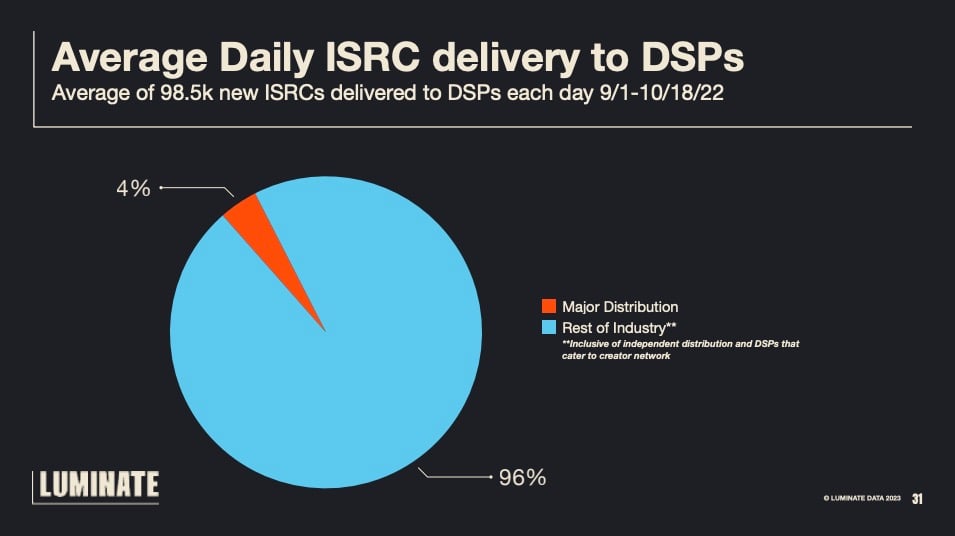
The scale of ‘DIY’ music uploaded to streaming services has skyrocketed, and the three major record companies – Universal Music, Sony Music, and Warner Music – have seen their market share eroded, slightly but consistently, year-over-year. This spells unhappy news for the ‘majors’, who have historically been benchmarked against one another, and the industry at large, by market share above any other metric. The trend can largely be explained by the explosive growth of the independent and in particular ‘DIY’ artist sector in recent years.

Source: As major label market share falls on Spotify, can we expect even more indie investment from the ‘Big Three’?

Are The Metaverse And Web3 Still Relevant?

Both technologies certainly aren’t getting the attention they were a few years back. But this isn’t necessarily a sign that they are dead. In fact, it isn’t even necessarily a bad thing. When technology trends are at a peak in the hype cycle, they inevitably attract the attention of those who are just interested in moving in on the current Big Thing in order to make money. In the web3 world, the current most visible example of this is the recent collapse of FTX.

Source: Are The Metaverse And Web3 Still Relevant?

Impact of AI on the creator economy market 

According to the latest report by Citi, the creator economy market is estimated to be worth around $60 billion per year, and it’s expected to grow at a rate of approximately 9% until 2024, reaching $75 billion. However, this is missing the obvious. The impact of AI on the creator economy market is likely to be significant. AI has the potential to revolutionize the way creators produce and distribute their content and the way audiences consume it.

Source: Impact of AI on the creator economy market – Kaptur

Publishers Worry A.I. Chatbots Will Cut Readership

New artificial intelligence tools from Google and Microsoft give answers to search queries in full paragraphs rather than a list of links. Many publishers worry that far fewer people will click through to news sites as a result, shrinking traffic — and, by extension, revenue. “You could essentially call this the Wikipedia-ization of a lot of information,” said Bryan Goldberg, the chief executive of BDG, which publishes lifestyle and culture websites like Bustle, Nylon and Romper.

Source: Publishers Worry A.I. Chatbots Will Cut Readership

Get the latest RightsTech news and analysis delivered directly in your inbox every week
We respect your privacy.