Just before Christmas, a bi-partisan group of lawmakers introduced the Music Modernization Act, which, among other things, would create a new blanket license for mechanical reproduction rights to musical compositions and establish a new entity to collect and distribute mechanical royalties.
 The bill is meant to address one of the abiding sources of friction within the digital music streaming business. Musical compositions in the U.S. are subject to a compulsory mechanical license, meaning anyone can record a song and sell copies of that recording by sending a notice of intent (NOI) to the composition’s copyright owners and paying a per-copy royalty set by the Copyright Royalty Board.
Unlike the public performance right, however, where performance rights organizations (PROs) like ASCAP, BMI and SESAC aggregate millions of compositions and offer a blanket license covering their entire repertoires, anyone availing themselves of the compulsory mechanical license is required to identify and pay the appropriate copyright owners individually. Where the copyright owners cannot be identified or located, the user can file the NOI with the U.S. Copyright Office and the royalties paid are held in escrow until the rights owners are located.
The system worked well enough for many years when it was rare for anyone or any outlet to make bulk use of the mechanical reproduction right. With the rise of digital streaming, however, which has been held to implicate both the public performance and the mechanical reproduction right, the lack of an efficient system for administering mechanical rights has been a constant source of tension, between digital service providers like Spoity and Apple Music on the one hand, and music publishers and songwriters on the other.
That tension has frequently erupted into litigation, including the $1.6 billion lawsuit filed against Spotify in December by Wixen Music Publishing over Spotify’s alleged failure to pay required mechanical royalties.
Should it become law, the Music Modernization Act could go a long way toward easing those tensions. Since it’s introduction, in fact, the bill has gained broad support throughout the industry. In a rare show of unity, a group of more than 20 industry organizations representing music publishers, songwriters, record labels, PROs, and service providers issued a joint statement earlier this month endorsing the bill and urging its passage.
Much of the credit for the bill’s introduction and for rallying support behind it belongs to the National Music Publishers Association (NMPA) and its CEO David Israelite, who worked closely with the bill’s sponsors on Capitol Hill and helped broker the joint statement. Israelite will sit down with me for a special fireside chat at Digital Entertainment World on February 5th to discuss the Music Monetization Act, as well as other issues facing the industry, including the music industry’s notorious data challenges, and the future of performance rights licensing in the wake of recent court cases.
This week, we asked Israelite a few preliminary questions to set the stage for his fireside chat:
RightsTech Project: Last week, a group of music industry organizations jointly endorsed the Music Modernization Act, the Classics Act and the AMP Act. To what do you attribute the sudden outbreak of cooperation among so many different stakeholders?
 David Israelite: We have a window of momentum and consensus that is ripe for action. Congressional leaders like Judiciary Committee Chairman Bob Goodlatte, who retires this year, has made copyright reform a priority, and with songwriter champions like Rep. Doug Collins (R-GA) and Rep. Hakeem Jeffries (D-NY) offering consensus bills like the MMA – and the Senate hopefully following suit – there is a real opportunity to move legislation that will significantly help the future of songwriting. Additionally, the MMA is not a wish list for music publishers and songwriters – it is a bill that took months to negotiate because it helps both the tech and music industries. No one got everything they wanted – but both sides are better off with the MMA. DiMA, which represents the biggest tech companies in the world is supportive, as are the biggest songwriter groups in the U.S.
Largely because of the momentum around the MMA – the music industry has coalesced around other music bills that will help legacy artists and producers. As I have always said – we are stronger together – and we have a great opportunity to not just help our segment of the pie – but to advance the whole creative class. After years of trying to develop and unite around reasonable reforms, it is truly exciting that today we stand together and that Congress is invested in these changes as well.
Where do you think the debate over the BMI/ASCAP consent decrees goes now in the wake of the 2nd Circuit decision?
BMI’s win sends a strong message that the DOJ cannot simply reinterpret decades of industry practice and upend the lives of thousands of songwriters. The new leadership in DOJ’s antitrust division hopefully offers a new path forward, and I believe they are looking at the consent decrees with fresh eyes. My hope is that they will ultimately abolish them altogether and give songwriters the free market that other intellectual property owners enjoy.
3) What is NMPA’s position on the various PRO database initiatives (ASCAP/BMI; ASCAP/SACEM/PRS)?
The PROs currently offer searchable repertoires. Their efforts to create a single database will bring clarity to the industry – however these initiative will take time and money. I look forward to seeing their progress in the coming months.
Click here for information on how to register for Digital Entertainment World.

 Last week, the Australian government unveiled legislation to extend the current digital safe harbors there to libraries, educational institutions, organizations for the disabled, archives, and other cultural sectors. But in a reversal from a previous government position, the legislation would
  Apart from trading Bitcoin, just about the hottest application running on a blockchain at the moment is
  In one of his first acts as president, Trump pulled the U.S. out of the Trans-Pacific Parternship (TPP), the 12-nation pact originally intended to enshrine U.S. economic influence in Asia and throughout the Pacific Basin. To the dismay of many technology companies and consumer rights groups, the treaty’s intellectual property chapter, drafted largely by U.S. negotiators working in close consultation with U.S. copyright interests (and the pharmaceutical industry), contained a number of provisions requiring other countries to adopt strong U.S.-backed copyright protections, including anti-circumvention rules for technical protection measures, enhanced enforcement procedures and remedies, including for secondary liability, and extended terms for copyright.
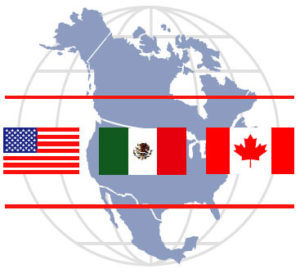 History shows that “having another deal already in place or almost in place certainly strengthens your hand” in trade negotiations, the director of the Mexico Institute at the Wilson Center, Duncan Wood,
 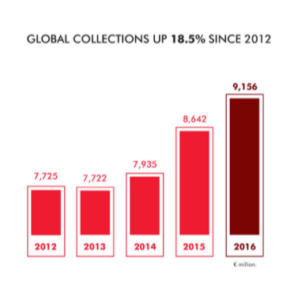 Music royalties, which make up the bulk of CISAC-member collections, rose 7 percent for the year, to €8.0 billion (US $9.4 billion) powered by rapid growth in streaming services in several major markets. The U.S. and Canada saw the biggest increase, at 12.5 percent, followed by the Asia-Pacific region, which grew 10.3 percent.
 The studio defendants, Disney, Fox and Paramount, do not dispute that the MOVA technology may have been stolen. But they strongly reject the claim that the owner of MOVA, whether Rearden or someone else, also owns the copyright on the work it produces. What show up on the screen, they claim, is chiefly the result of human inputs, from the film’s direction, the performances of the actors, and the photography of the cinematographer. To argue that the owner of the effects software also owns its output, the studios say, makes no more sense than arguing that Microsoft owns the copyright on any work produced using Word, or Adobe any work produced in Photoshop.


 But the settlement of the lawsuit isn’t likely to end the debate over how courts and the law should regard works created by non-human authors. In fact, the debate may only be getting started.